

A long-used traditional medical procedure in Thailand is Thai herbal compress massage. This unusual massage method uses heated herbal compresses that are gently and rhythmically administered to the body.
Thai Herbal Compress Massage is a well-liked option for those seeking to unwind and refresh because it provides a wealth of bodily and mental advantages. In order to help you decide if this therapeutic procedure is correct for you, we will examine the advantages and methods of Thai Herbal Compress Massage in this post.
What is Thai Herbal Compress Massage?
Thai herbal compress massage is a traditional healing method that combines massage methods with the use of warm herbal compresses infused with a mixture of traditional Thai herbs. To offer a soothing and healing sensation, the herbal compress is softly rolled and smoothed over the body.
Among the herbs thought to offer therapeutic effects include camphor, kaffir lime, lemongrass, turmeric, and others. A variety of physical and mental health benefits can be obtained from Thai herbal compress massage, a novel therapy that combines the advantages of heat, herbs, and massage.
What are the Benefits of Thai Herbal Compress Massage?
Reduces Pain and Stiffness in Muscles: The heat and pressure from the herbal compress work to relax tense muscles, reduce pain and stiffness, and increase flexibility.
Increases Blood Circulation: The heat and pressure from the herbal compress work to increase blood flow, enhance oxygen delivery to the muscles, and facilitate the body's clearance of toxins.
Increases Respiratory Health: Nasal congestion can be cleared out, deep breathing is encouraged, and general respiratory health can be improved by the aroma of the herbs included in the compress.
Reduces Stress and Anxiety: The Thai herbal compress massage's combination of heat, pressure, and aromatherapy can assist to promote relaxation, reduce tension and anxiety, and enhance general mental health.
Enhances Immune System Function: The antibacterial and anti-inflammatory qualities of the herbs included in the compress can aid to strengthen the immune system and enhance general health.
What are the Techniques used in Thai Herbal Compress Massage?
The herbal compresses are prepared by steaming them in order to unleash their aroma and bring about their therapeutic effects. The client will often change into comfortable clothing as the therapist prepares the compresses.
Application: Using a range of pressure and heat settings, the therapist will gently press and roll the compresses over various body parts. The therapist will frequently concentrate on particular knots or sore spots, such the legs, back, shoulders, or neck.
Massage: To further increase the therapeutic effects of the herbal compress, the therapist will apply massage techniques like kneading, stretching, and acupressure.
Aftercare: The massage therapist will often advise drinking water to help the body flush out toxins and get more hydration after the massage.
What to Expect During a Thai Herbal Compress Massage Session?
An average session of a Thai herbal compress massage lasts 60 to 90 minutes. The session usually starts with a discussion of any health issues, painful or tense spots on the body, or other issues with the therapist. After that, the therapist will lead the client through the massage while employing the herbal compresses and other massage methods to create a soothing and therapeutic atmosphere.
The warmth of the herbal compress and the aroma of the herbs may aid in promoting relaxation and lowering stress in the clients. If the pressure or heat seems uncomfortable throughout the session, it's crucial to let the therapist know.
Who Can Benefit from Thai Herbal Compress Massage?
Most people can benefit from a Thai herbal compress massage, including those who have muscle stiffness, soreness, or tension. Those with respiratory problems, stress, anxiety, or compromised immune systems may also find it helpful. Yet, it's crucial to speak with a doctor before beginning any kind of massage therapy, particularly if you have any underlying medical issues.
Conclusion
A unique and age-old therapy known as Thai herbal compress massage combines the therapeutic effects of heat, herbs, and massage to offer a variety of physical and mental health advantages. Most people, regardless of age or health state, can benefit from this gentle, non-invasive therapy.
Thai herbal compress massage has therapeutic advantages such as easing muscle tension and pain, increasing blood circulation, promoting immune system function, enhancing respiratory health, and lowering stress and anxiety. The creation of the herbal compress, the application of pressure and heat, and the incorporation of massage techniques are the techniques employed in Thai herbal compress massage.
Customers can anticipate a pleasant and comforting experience that might enhance their physical and mental well-being during a Thai herbal compress massage session. Yet, it's crucial to speak with a doctor before beginning any kind of massage therapy, particularly if you have any underlying medical issues.
In general, Thai herbal compress massage is a secure and efficient therapy that can support relaxation, ease stress and discomfort, and enhance general health and wellbeing.
UPDATED LOFT THAI GUIDE
Additional guidance and current information
The following editorial update expands on the original Loft Thai article with practical context, current treatment guidance and further reading.
What Is a Thai Herbal Compress?
A Thai herbal compress is a cloth bundle filled with chopped or powdered plant material, then warmed with steam before controlled application.
The therapist may press, roll, dab or hold it briefly over selected areas and alternate it with manual massage.
Heat, moisture, pressure, aroma, recipe and contact time create the experience together.
Luk Prakob in Thai Traditional Practice
Hot herbal compresses have a recognised place within Thai traditional medicine and contemporary Thai spa practice.
WHO material records hot compresses alongside herbal medicine, traditional massage and other established Thai practices.
Cultural continuity deserves precise description rather than a universal ancient-cure narrative.
A Recipe Is More Than a Hero Ingredient
Published recipes often include plai or ginger-family rhizomes, turmeric, kaffir lime, lemongrass, tamarind leaves, salt and camphor in varying proportions.
A laboratory finding for one isolated plant cannot prove the effect of every whole compress.
Ask for the actual recipe, source and warnings used on the booking date.
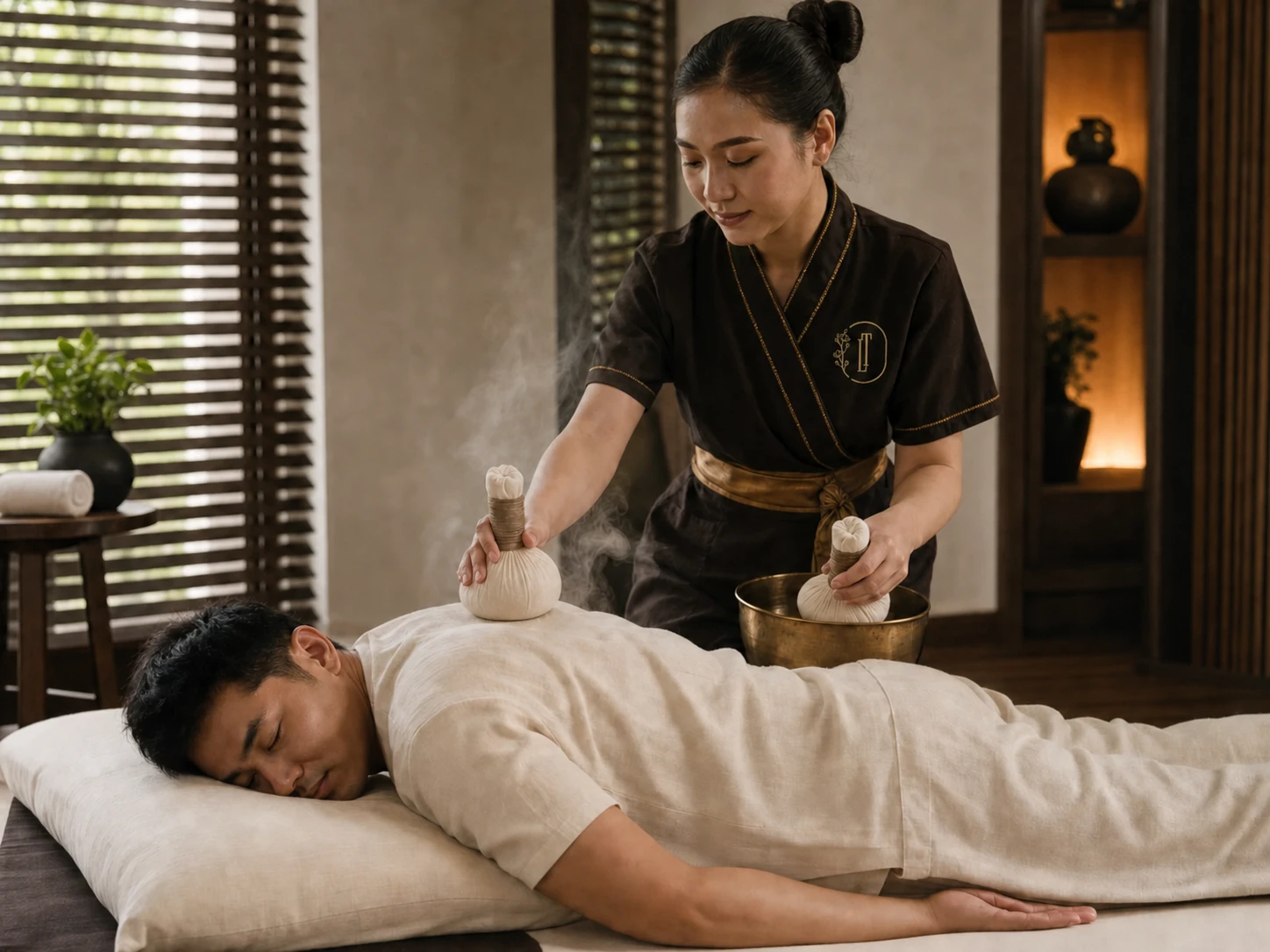
Loft Thai’s Four Current Compress Directions
The reviewed current menu lists Thai herbal, eucalyptus, lemongrass, and plai with camphor-tree compress choices.
These options differ in aroma and formula and may not suit the same guest.
The fresh homemade option still requires ingredient traceability, safe preparation and hygiene.
Steaming Activates Heat and Aroma, Not a Guarantee
Steam warms and moistens the bundle and releases volatile aroma into the treatment room.
It does not convert every ingredient into a clinically proven dose or make skin penetration predictable.
Steaming time and rewarming need control so the compress remains usable without becoming dangerously hot or waterlogged.
Temperature Is the First Safety Check
The therapist should test the compress, begin with lighter moving contact and continue checking comfort.
A compress may retain heat unevenly, especially immediately after steaming.
Burning, sharp heat, numbness or a need to endure are reasons to stop immediately.
The Current Ritual Begins with Traditional Thai Massage
Loft Thai’s current sequence begins with traditional Thai massage before the warm compress stage.
Compression, supported movement and joint mobilisation form a separate manual component.
Any perceived result therefore cannot automatically be attributed to the herbs alone.
What the 2015 Systematic Review Found
The review included thirteen comparative studies involving 778 participants and several different conditions and protocols.
Most studies used quasi-experimental designs, many had high risk of bias, and recipes and procedures varied.
The authors advised caution; the evidence does not justify broad claims for every spa guest.
Heat May Explain Part of the Experience
In the review, herbal compress outcomes for osteoarthritis or muscle pain were often compared with hot compresses, exercise or medicines.
Results were not consistently different from comparators, making it difficult to separate herb, heat, attention and massage.
A spa article should not describe trend-level or condition-specific findings as proof of a general cure.
The Safety Evidence Is Incomplete
Only three of the thirteen reviewed studies reported safety outcomes.
The review also cited community-product testing that found recipe variation and contamination in part of a small sampled set.
That historical finding does not condemn current products; it shows why sourcing, storage, cloth hygiene and preparation matter.
Natural and Homemade Are Not Safety Certificates
FDA consumer guidance warns that ingredient origin does not determine cosmetic safety.
Plants, fragrance compounds and camphor can irritate or trigger allergy depending on formula and person.
A homemade compress needs the same disciplined handling as any other product applied warm to skin.
Single-Guest Handling and Storage
Confirm whether each bundle is single guest, how it is stored before use and how tools and steaming equipment are cleaned.
A damp, plant-filled bundle should not move casually between guests.
The spa should be able to identify the batch or preparation date when a reaction needs investigation.
Remove Detox, Immunity and Respiratory Promises
Sweating, warmth and aroma do not prove that toxins have been removed from the body.
A scented compress does not treat respiratory disease, strengthen immunity or replace anxiety care.
The credible benefits language is sensory warmth, traditional process and potentially short-term comfort within an adapted session.
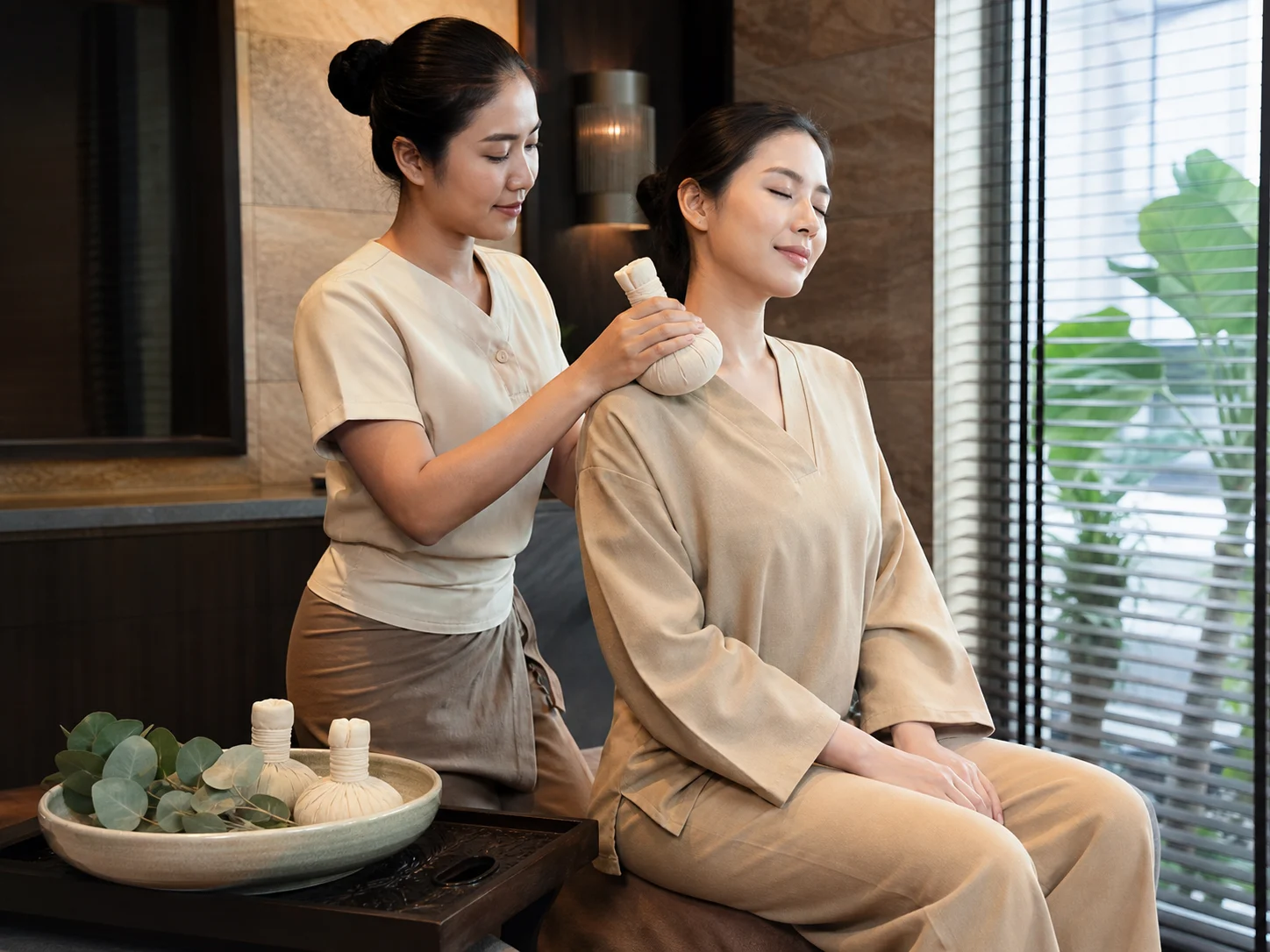
Who Needs Caution or a Different Plan
Disclose altered sensation, heat intolerance, active rash, broken skin, fever, pregnancy, recent procedure and significant allergy.
Acute injury, unexplained swelling, severe pain or neurological symptoms need appropriate assessment.
A clinician’s restrictions take priority over a general spa protocol.
current Duration and Price
Thai Herbal Compress is listed at 90 minutes for 3,200 THB.
The sequence includes traditional Thai massage followed by the selected warm compress.
Confirm branch availability, recipe, heat, duration and current price before booking.
Before the Appointment
Choose the compress direction after reviewing ingredients and fragrance.
Share allergies, medication, pregnancy, heat sensitivity, skin condition and areas to avoid.
Ask whether the bundle is fresh, how temperature is tested and what clothing is provided.
After the Appointment
Notice persistent redness, burning, swelling, rash or breathing symptoms and seek appropriate advice when significant.
Do not use sweating or urine colour as a detox score.
Request the recipe and product record if an adverse reaction requires follow-up.
Twelve Questions for a Herbal-Compress Booking
Which recipe, plant parts, fragrance and camphor level are used?
How is the bundle prepared, stored, steamed, tested, cleaned and assigned to one guest?
Which massage steps, areas, clothing, branch, duration, current price and stop signals apply?
Tradition Becomes Stronger Through Precision
Thai herbal compress massage combines cultural knowledge, a complex plant product, heat and skilled touch.
Its identity does not depend on exaggerated detoxification, immunity or disease claims.
A traceable recipe, controlled temperature and honest evidence create the more credible ritual.
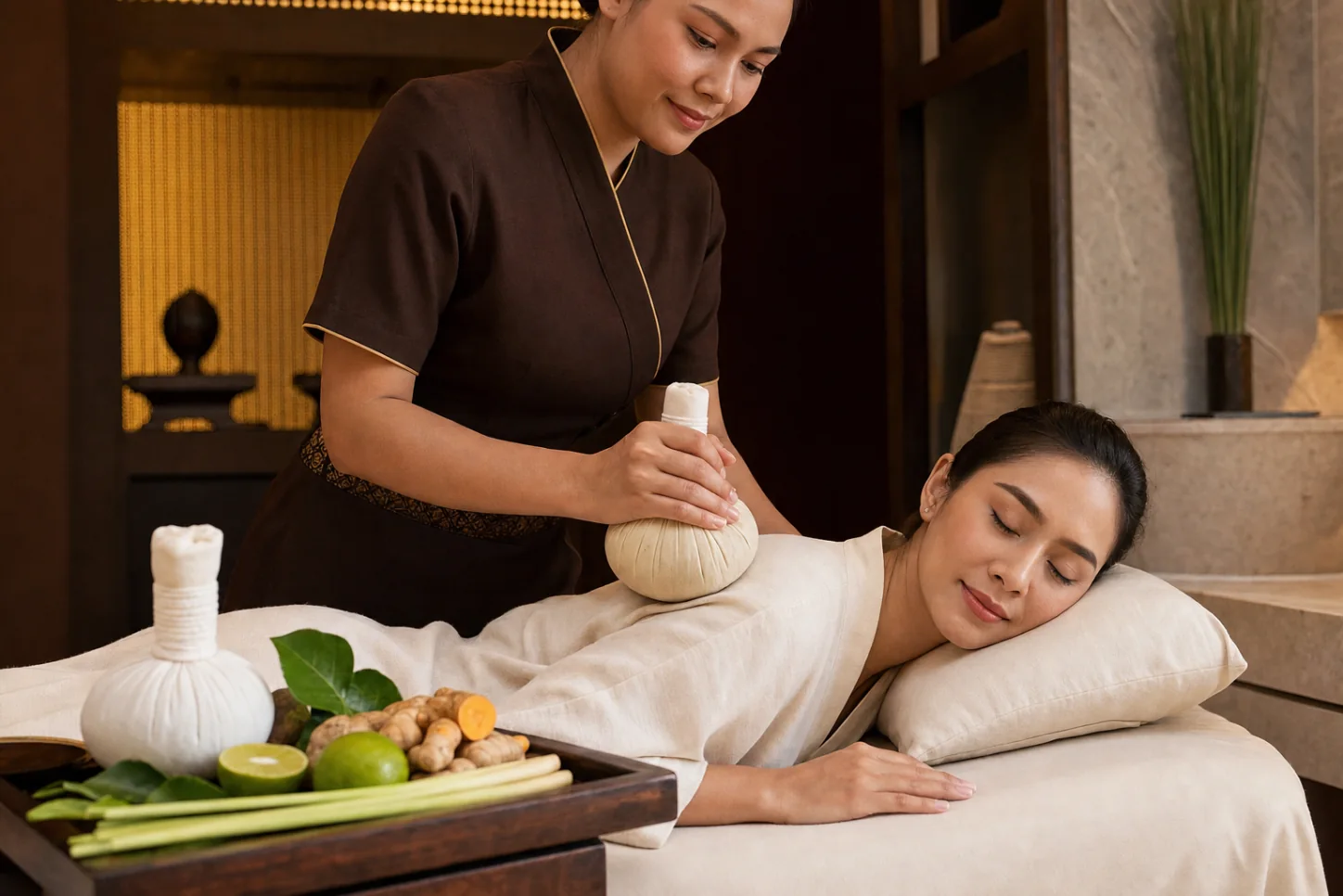
“A compress is not one herb or one mechanism; it is a complete heated product whose recipe, temperature, handling and massage context all matter.”
Loft Thai Editorial Team
Continue your research
REFERENCES
Sources & further reading
PRACTICAL GUIDANCE
Frequently Asked Questions
What is inside a Thai herbal compress?
Recipes vary. Common materials include plai or ginger-family rhizomes, turmeric, kaffir lime, lemongrass, leaves, salt and camphor. Ask for the actual current formula.
Does a herbal compress detoxify the body?
No systemic detoxification is established. Warmth and perspiration do not prove that internal toxins have been removed.
Is herbal compress massage scientifically proven for pain?
Research includes condition-specific studies, but protocols are heterogeneous and many older studies had high risk of bias. Results should not be generalised to every spa guest.
Who should be cautious?
People with altered heat sensation, active skin problems, significant allergy, recent procedures or relevant health conditions need screening and may need medical advice.
What does Loft Thai’s current service cost?
The reviewed current menu lists Thai Herbal Compress at 90 minutes for 3,200 THB. Confirm current branch availability and recipe.
CONTINUE READING
Related stories
A Guide to Thai Herbal Compress Therapy at Loft Thai Spa in Bangkok.
If you are looking for a unique and effective way to relax and rejuvenate your body and mind, look no further than Thai Herbal Compress Therapy. This ancient healing technique has been used in Thailand for centuries, and is now available at Loft Thai Spa in…
Read the guide
Healing Herbs of Thailand: Secrets Behind Herbal Compress Therapy
Herbal compress therapy, a traditional healing practice in Thailand, involves the use of heated compresses filled with a blend of medicinal herbs. This therapy is known for its therapeutic benefits, promoting relaxation, improving circulation, and alleviating…
Read the guide
The Use of CBD and Other Natural Ingredients in Spa Treatments
Spa treatments have long been known for their capacity to induce relaxation and renewal, and the use of natural chemicals has been increasingly popular in recent years. Cannabidiol (CBD), a substance produced from the cannabis plant, is one such component that…
Read the guide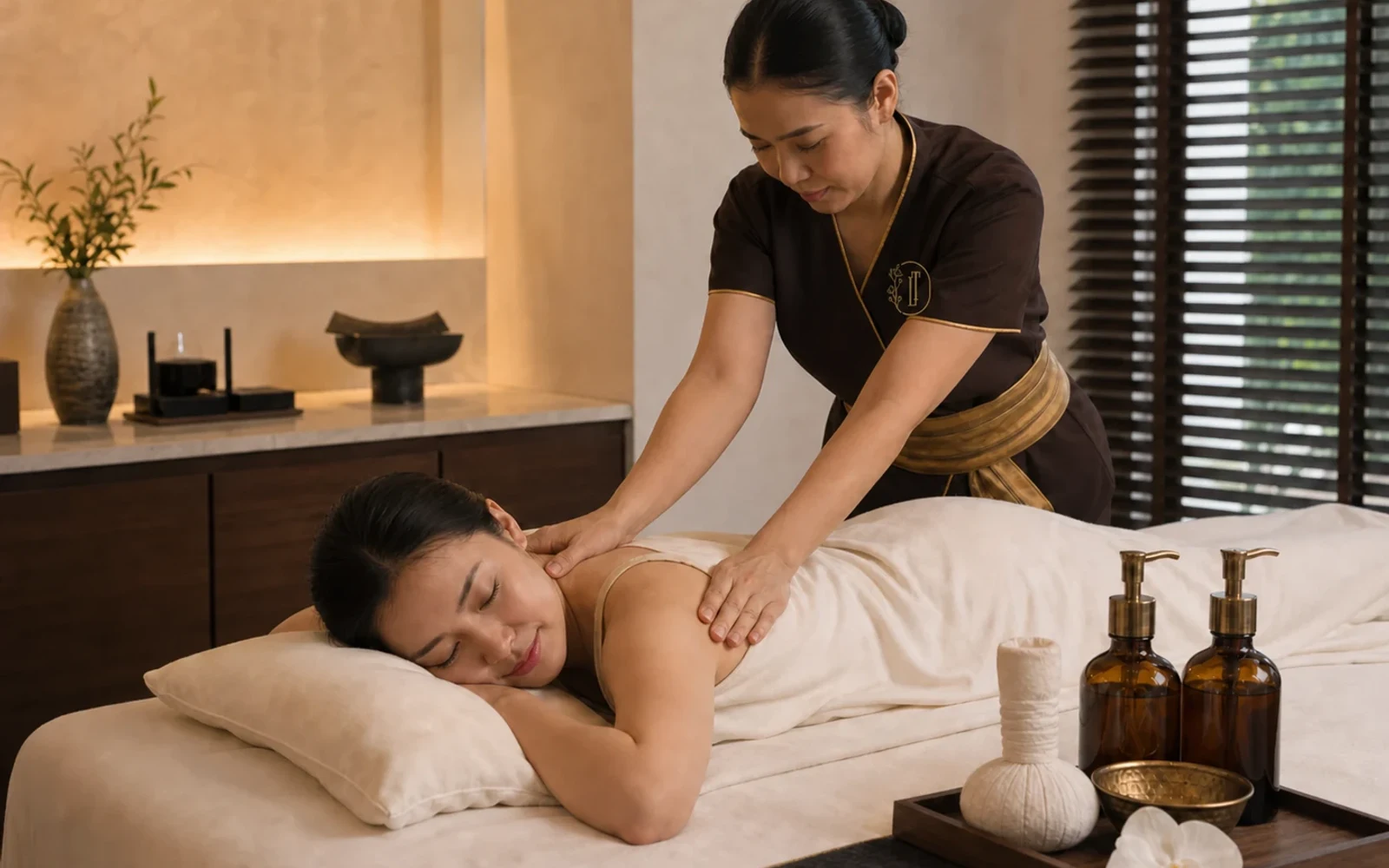
The key differences in technique and approach between Thai massage and Swedish massage
Swedish massage and Thai massage are two well-liked types of massage therapy that use various methods and techniques. While both types of massage can help people unwind and relieve stress, their approaches and objectives are different.
Read the guide