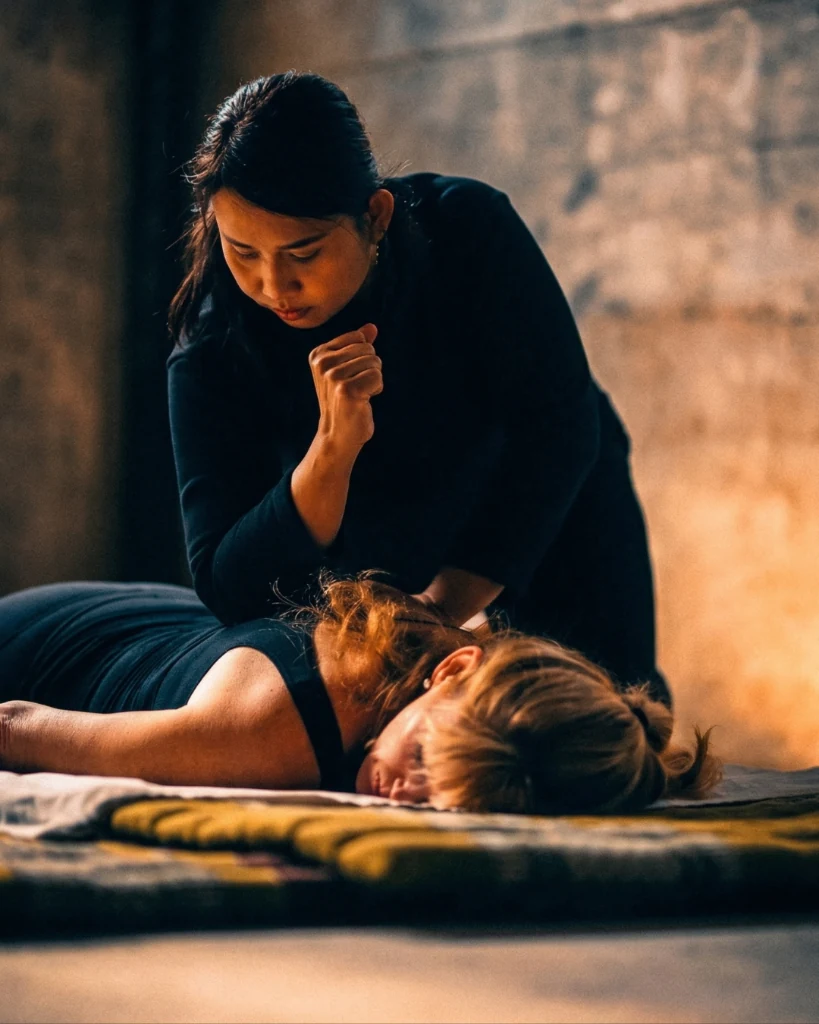
What happens during a traditional Thai massage, especially on a first visit?
Traditional Thai massage combines pressure through clothing with assisted movement and stretching. Instead of lying still while a therapist uses long oil strokes, you may be guided onto your back, side or front, and sometimes into a supported seated position. The sequence varies with the practitioner and your needs. You do not need to memorise any positions: follow the therapist's instructions and tell them whenever a movement feels uncomfortable or confusing.
Before starting, explain that this is your first Thai massage and describe what you would like from it. For example, you might want a gentle introduction, attention to tired legs after sightseeing, or a slower session with limited stretching. Mention previous injuries and any areas you do not want touched. Agreeing on these details is more useful than simply asking for the strongest treatment available. You can request an explanation before a stretch, particularly if unexpected movement makes you nervous.
At Loft Thai, the traditional treatment is offered in a private individual or couple room. Pressure, pace and the range of movement are adapted to the guest. A first appointment is an opportunity to discover whether you enjoy this style of bodywork; there is no need to complete every possible technique or imitate the dramatic stretches seen in videos. You remain free to ask for a pause or a change throughout the session. Leave a little breathing room in your itinerary afterwards so you can get dressed, stand up comfortably and notice how you feel before returning to Bangkok's busy streets.
Further reading: First-visit experiences on Reddit
What should I wear for Thai massage, and do I have to undress?
Traditional Thai massage is performed clothed. You do not need to undress as you would for an oil massage, because the therapist applies pressure through the fabric and guides your body through supported movements. At Loft Thai, comfortable treatment clothing is provided where needed. If you have a particular clothing, sizing or modesty preference, mention it when you book so the team can explain the arrangements before you arrive.
If you are wearing your own clothes, think about comfort during movement rather than appearance. Soft trousers with room around the hips and knees, together with a comfortable top, are practical choices. Avoid stiff denim, bulky pockets, hard belts and large fastenings that could press into your skin when you lie down. Clothing should allow you to bend a knee or raise an arm without pulling tightly or leaving you worried about coverage. You can keep your underwear on beneath the treatment clothes.
It also helps to remove jewellery or accessories that get in the way and put your phone somewhere it will not interrupt the session. If a waistband or sleeve becomes uncomfortable during a stretch, say so immediately; there is no reason to endure a distracting clothing problem for the rest of the appointment. When booking a combination treatment, check the clothing arrangements separately, because a session that includes oil or balm may have a different setup. Being clear about the exact service prevents surprises. Your comfort with clothing and touch is part of the consultation, and you can ask questions before the treatment begins.
Further reading: Clothing questions on Reddit
Is Thai massage supposed to hurt, and can I ask for lighter pressure?
Thai massage can feel firm and unfamiliar, but you should not have to endure pain to receive it. Pressure and assisted stretches need to stay within your comfort and physical limits. A useful session is not measured by how much discomfort you tolerate. The idea that every authentic Thai massage must be painful appears often in online discussions, but it is a poor guide to choosing the right treatment for your body.
Tell the therapist what you mean by light, medium or firm pressure before starting. Those words are subjective, so give feedback as the session develops. Clear requests such as 'less pressure here', 'please avoid my knee' or 'stop this stretch' are more helpful than quietly hoping the therapist notices a tense expression. You may prefer stronger pressure on one area and a much gentler approach elsewhere. Agreeing to firm pressure at the beginning does not commit you to keeping it for the full appointment.
Stop a movement that causes sharp pain, tingling, numbness or a sense that a joint is being forced. Ask for a different position or for that technique to be left out. If you feel unable to relax because you are anticipating the next stretch, a slower sequence with smaller movements may suit you better. At Loft Thai, explain whether you want a gentle introduction or a more substantial pressure-based session; the team can help you compare the options. Feeling comfortable enough to speak up is especially important on a first visit. You are participating in the treatment, and your feedback should guide its intensity from start to finish.
Further reading: Pressure experiences on Reddit · Thai Healing Alliance guidance
What is the difference between Thai massage, oil massage and deep tissue massage?
The main differences are the techniques, the way you move during the appointment and the use of oil. Traditional Thai massage is usually clothed and centres on compression, pressure and assisted stretching. An oil massage uses a lubricant so the therapist can glide over the skin. Deep tissue describes an approach that works more deliberately with deeper layers of soft tissue; it is not simply another name for Thai massage or a guarantee of maximum pressure.
Think about the experience you want. If you enjoy being guided through movement and prefer to remain clothed, traditional Thai massage may be a good fit. If you would rather settle into flowing strokes with fewer position changes, an oil-based treatment may be more appealing. Neither style automatically determines intensity. An oil massage can be firm, while a Thai session can be adapted to use gentle pressure and smaller stretches. Tell the therapist about your preference instead of relying only on the treatment name.
Loft Thai also offers Thai Combination Massage, which brings together acupressure, Swedish-style strokes, Thai stretching and balm. This can be worth discussing when you like elements of both approaches. Read the specific description and ask how the session is organised, because 'combination' does not mean the same sequence at every spa. If your main concern is an injury or persistent pain, choose the treatment with appropriate professional advice rather than assuming that deeper pressure is more effective. A useful booking conversation is specific: explain whether you prefer clothes on, whether you enjoy stretching, which areas need gentler handling and how you would like to feel during the appointment.
Further reading: Thai and Western massage compared on Reddit
Should I book a 60, 90 or 120-minute Thai massage?
Choose the duration around your comfort, priorities and available time. Sixty minutes can be a practical introduction if you have never tried Thai massage or are unsure how much stretching you enjoy. It gives you a chance to experience the style without committing to a long appointment. Tell the therapist your main priority at the start, because a shorter session leaves less time for a detailed full-body sequence and several areas of extra attention.
Ninety minutes allows a more spacious appointment, with time to move through the body and spend longer on selected areas. It may suit someone who already enjoys massage and wants a balanced visit within a busy Bangkok itinerary. Two hours gives more room for a slower sequence, gradual transitions and additional attention where appropriate. Extra time does not need to mean extra force. A longer appointment can remain gentle, just as a shorter one can feel quite substantial if the pressure is firm.
For Traditional Thai Massage, the options currently shown on this page are 60 minutes at 1,000 THB, 90 minutes at 1,400 THB and 120 minutes at 1,900 THB. Check the selected service and duration in the booking flow, since Thai Warrior and Thai Combination have different menus. If you are worried about restlessness, positioning or discomfort, discuss that before choosing the longest session. There is no obligation to work up to two hours, and a longer treatment is not automatically better. Leave time around the appointment for arrival and changing, particularly if you have a flight, dinner reservation or another fixed commitment afterwards.
Further reading: Session-length questions on Reddit
Can Thai massage help with back tension, desk stiffness or stress?
Some people find Thai massage helpful for easing a sense of muscular tension and feeling more comfortable in movement. The combination of touch, a slower pace and supported stretching can also provide a welcome break from desk work or travel. Those are reasonable goals for a spa visit. They are different from expecting a massage to diagnose a condition, repair an injury or permanently correct the cause of recurring back pain.
Research on massage suggests that some pain benefits may be short term, and the strength of the evidence varies. Findings about massage in general do not prove that a particular Thai technique will work for every person. Online accounts of someone feeling transformed after one session are personal experiences, not a prediction of your result. If you have persistent, worsening or unexplained pain, arrange a medical assessment rather than repeatedly booking stronger massage in the hope of fixing it.
For everyday comfort, make your request concrete. You might explain that your shoulders feel tired after laptop work, that your hips feel stiff after sitting, or that you want a calm session with limited stretching. Describe what you notice without feeling you must identify the muscle or diagnose the problem yourself. At Loft Thai, you can compare Traditional Thai Massage with the more targeted Office Syndrome option and ask which approach best matches the experience you want. Keep expectations practical: a session can be one part of looking after yourself alongside suitable movement, breaks from sitting and any care already recommended to you. Notice how you feel afterwards and use that feedback when deciding whether to return.
Further reading: Guest experiences on Reddit · Evidence overview from NCCIH
Do I need to be flexible or practise yoga before trying Thai massage?
You do not need to practise yoga or demonstrate a particular level of flexibility before asking about Thai massage. Assisted stretching means the therapist guides the movement; it is not a class in which you must copy a pose or achieve a target position. What matters is whether the treatment can be adapted safely and comfortably to you. Feeling stiff is a reason to discuss your limits, not a reason to force your body through a dramatic stretch.
Explain any movement that is difficult before the appointment begins. For example, you may find lying on your front uncomfortable, dislike pressure around a knee, or have trouble staying in one position. A session can focus on smaller movements and comfortable compression rather than large ranges of motion. You can ask to change position or skip a stretch. If an injury, joint condition or other health issue affects your movement, get appropriate advice first and tell the therapist about any restrictions you have been given.
Being very flexible is not a reason to request the deepest stretch either. Tell the therapist if your joints are unusually mobile or have a history of instability, so that flexibility is not mistaken for permission to push further. For a first visit to Loft Thai, describe your normal activity level and what you hope to experience. You might want a gentle introduction after a long journey or a measured session between active days. There is no need to prepare by stretching aggressively beforehand. Choose comfortable clothing, communicate clearly and let the session stay within a range that feels controlled rather than competitive.
Further reading: Flexibility questions on Reddit · Thai massage explained by Cleveland Clinic · Joint mobility guidance from the NHS
Is soreness after Thai massage normal, and what should I do afterwards?
Mild temporary soreness can happen after massage, especially when the pressure or movements are unfamiliar. However, discomfort is not a requirement for a successful treatment, and bruising or significant pain should not be treated as proof that the therapist has done a better job. How you feel afterwards is useful feedback about whether the intensity suited you. There is no need to book another forceful session to try to remove soreness from the first one.
After an uncomplicated appointment, give yourself time to get up and notice how your body feels. Drink normally, take an easy walk if that feels comfortable and avoid forcing stretches into areas that are tender. A warm shower may feel soothing. If you feel sore, allow yourself some rest rather than going straight into a demanding workout. You do not need a special detox drink or an elaborate recovery routine to complete the spa experience. Keep the rest of the day flexible enough to choose a quieter pace if you want it.
Contact a healthcare professional if pain is severe, worsening or remains intense beyond a couple of days. New numbness, weakness or substantial swelling also deserves medical attention rather than an assumption that it is a normal massage reaction. For a future Loft Thai appointment, explain what happened, which area was affected and whether you would prefer lighter pressure or fewer stretches. That information is more useful than simply saying the last massage was 'strong'. You can also make the first booking shorter and leave space before deciding on a second visit. The aim is a comfortable experience that fits your body and your plans.
Further reading: Aftercare questions on Reddit · Soreness guidance from Cleveland Clinic
How often should I get Thai massage, and is a daily session a good idea?
There is no single Thai massage schedule that suits everyone. The appropriate interval depends on your health, the intensity of the session, your reason for booking and how you respond afterwards. A visitor choosing a gentle holiday experience has different considerations from someone seeking help with recurring discomfort. The fact that another traveller enjoys daily appointments does not establish that the same routine is suitable for you.
If this is your first Thai massage, book one session and give yourself time to assess the experience before committing to a series. Consider both how you felt during the appointment and whether ordinary activities feel comfortable afterwards. If you are still tender, a further strong treatment over the same areas is not a sensible automatic next step. Discuss the reaction with the therapist and seek medical advice when symptoms warrant it. You can enjoy quieter activities between appointments without treating every free hour of a Bangkok holiday as a chance to fit in another massage.
For ongoing visits, explain your goals rather than requesting a fixed schedule copied from a forum. You may simply want an occasional pause from work, or you may already have a care plan from a qualified professional that should guide what is appropriate. More appointments do not necessarily produce better results, and there is no required number of sessions to 'complete' traditional Thai massage. At Loft Thai, the team can help you compare the duration and pressure of the available services. Keep the choice responsive: use your comfort, the therapist's assessment and any relevant clinical advice to decide whether and when another visit makes sense.
Further reading: Massage-frequency discussion on Reddit
Who should seek advice before Thai massage, including during pregnancy?
Thai massage should be chosen with your health and the planned techniques in mind. Tell the team before booking about pregnancy, a recent operation or injury, fragile bones, a bleeding disorder, blood-thinning medication or a history of blood clots. These details can affect whether massage is appropriate and which pressure, positions or movements should be avoided. A spa consultation does not replace advice from the clinician who understands your condition.
During pregnancy, choose a dedicated prenatal service after discussing suitability; a standard Thai massage sequence is not recommended. ACOG advises telling the therapist that you are pregnant and describes side-lying as the preferred massage position. Prenatal massage should be provided by someone trained to work with pregnant guests. Contact Loft Thai with your stage of pregnancy and any advice or restrictions from your maternity-care professional so the team can explain the available options and booking requirements. An enthusiastic online account of prenatal Thai massage cannot establish what is appropriate for another pregnancy.
Likewise, do not use a massage appointment to investigate a new painful or swollen area, work through an acute injury or postpone assessment of unexplained symptoms. If you are unwell, have fever or have irritated or broken skin in the area to be treated, contact the team before attending and seek healthcare advice where needed. You do not have to decide on the correct technique by yourself. Share relevant information early, ask what can be adapted and accept that postponing or choosing a different service may be the better option. During any session, you can still request a pause or stop a movement even if the treatment was considered suitable beforehand.
Further reading: Prenatal massage questions on Reddit · Pregnancy guidance from ACOG · Thai massage precautions · Massage precautions from Mayo Clinic

 Thai Massage