
For years, the beauty industry has been dominated by products. Cleansers, serums, essences, ampoules, masks, retinoids, acids, creams and SPF became the language of modern skincare. People learned ingredient names, followed routines, compared textures and built bathroom shelves that looked almost like miniature beauty labs. But in 2026, something important is changing.
The conversation is moving away from “What product should I buy?” and toward “How should my face actually be treated?”
That shift explains the rise of searches around facial massage, sculpting facial, lymphatic drainage, natural anti aging and holistic beauty. Consumers are not abandoning skincare products, but they are becoming more aware that products alone cannot solve every visible sign of fatigue, stress, puffiness or tension. A serum can hydrate. A cream can support the skin barrier. An exfoliant can refine texture. But none of them can release a tight jaw, soften facial tension, encourage drainage, stimulate the feel of circulation or create the deep relaxation that comes from expert hands.
This is why facial massage is becoming one of the most important beauty and wellness movements of 2026. It is not simply a relaxing add-on at the end of a facial. In the best spas, it is becoming the center of the treatment itself. The modern luxury facial is no longer only about what is applied to the skin. It is about how the skin, muscles, lymphatic system and nervous system are supported together.
The End of Product-Only Skincare
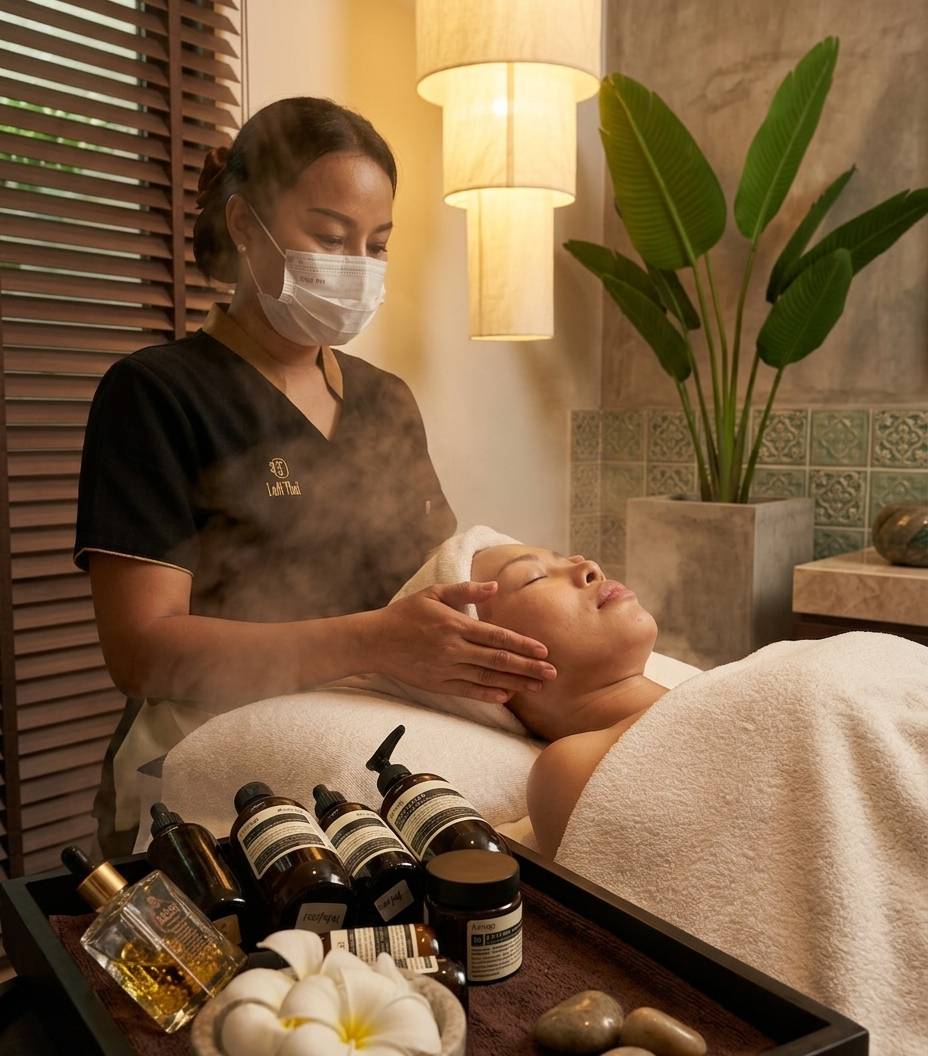
The skincare boom created a more educated consumer. People now understand hydration, exfoliation, antioxidants, barrier repair and sun protection better than ever. But it also created confusion. Many people use too many products, switch routines too often or expect a bottle to correct problems that are partly caused by lifestyle, posture, sleep, stress and muscle tension.
In a city like Bangkok, this matters even more. Heat, humidity, air-conditioning, pollution, long workdays and urban stress can leave the face looking tired even when the skin is technically well cared for. Someone may use a quality moisturizer and still wake up puffy. They may use brightening products and still look dull. They may apply anti-aging creams and still feel heaviness around the jaw, temples or eyes.
The reason is simple: the face is not only skin. It is also muscle, fascia, fluid movement, blood flow and expression. It reacts to emotions, sleep, stress, food, hydration, screens and daily habits. When beauty is treated only as a product routine, this larger picture is often missed.
Facial massage brings that bigger picture back. It treats the face as something living, expressive and connected to the body. It asks not only whether the skin is dry or oily, but whether the face is holding tension. It looks not only at glow, but at circulation. It thinks not only about fine lines, but about stress patterns. This is the foundation of holistic beauty.
The Science Behind Facial Massage and Circulation
One of the reasons facial massage is becoming more respected is that it has a plausible physiological basis. Massage is not magic, and it should not be marketed as a miracle replacement for dermatology or medical treatments. But manual stimulation can affect the skin’s appearance in visible and meaningful ways.
A study published in Complementary Therapies in Medicine examined facial massage roller use and found that short-term facial massage increased facial skin blood flow, while longer-term use was associated with improved vascular dilation response. The study was small, but it supports something many therapists and clients notice in practice: after facial massage, the skin often looks fresher, warmer and more awake.
This matters because skin does not look radiant only because of products. Glow is also connected to microcirculation, hydration, sleep and the way light reflects from smooth, healthy-looking tissue. A product can sit on the surface, but massage creates movement. It can help bring a temporary vitality to the face that is difficult to achieve through skincare application alone.
This is one reason the sculpting facial has become so popular. People are looking for lift, definition and freshness without immediately turning to invasive procedures. A sculpting facial does not “change the face” permanently, and responsible spas should never promise surgical results. But through skilled manual work, it can help the face appear more open, less tired and better defined, especially when puffiness and muscle tension are part of the issue.
Lymphatic Drainage: The Real Benefit Behind the Trend
Few beauty terms have grown as quickly as lymphatic drainage. It appears in spa menus, social media videos, gua sha tutorials and anti-puffiness treatments. The trend is powerful, but it is often exaggerated. The real value of lymphatic drainage is not weight loss or dramatic transformation. It is gentle support for fluid movement and temporary reduction of puffiness.
UCLA Health explains that lymphatic massage can reduce swelling and create the temporary appearance of tighter, slimmer-looking skin, while also making clear that manual lymphatic drainage does not directly cause weight loss. For facial treatments, this distinction is important. A good lymphatic facial should not be sold as a miracle slimming treatment. Its strength is subtler and more refined: helping the face look less congested, less heavy and more rested.
In Bangkok, facial puffiness can be common because of heat, dehydration, travel, salty meals, poor sleep and long days in air-conditioned spaces. Many clients do not need a harsh peel or an aggressive treatment. They need gentle, intelligent movement. This is where a trained therapist makes all the difference. Lymphatic-style facial massage requires light pressure, patience and an understanding of direction. Too much force can irritate the skin or defeat the purpose of the technique.
The best facial massage is not about pressing harder. It is about knowing when to use light drainage, when to use sculpting pressure, when to relax the jaw, when to work around the eyes and when to leave sensitive skin alone.
Facial Tension: The Beauty Issue Products Cannot Fix
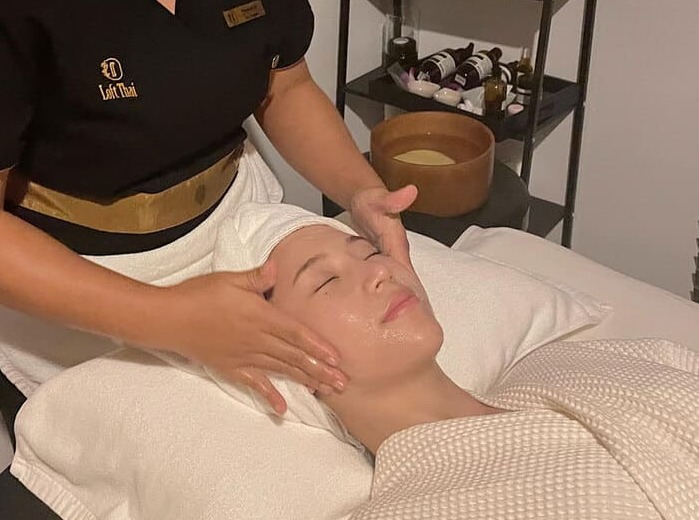
One of the most overlooked reasons facial massage is becoming more important than skincare products is muscle tension. The modern face works hard. It concentrates in front of screens. It squints in sunlight. It clenches during stress. It tightens during sleep. It holds emotion around the mouth, brow, temples and jaw.
The jaw is especially important. Many people carry stress in the masseter muscles, the muscles used for chewing. When the jaw is tight, the lower face can look heavier, the expression can seem tense and headaches or facial discomfort may become more noticeable. Skincare products cannot relax a clenched jaw. They cannot soften muscular habits. They cannot release tension around the temples.
Manual therapy research related to temporomandibular disorders has found that hands-on approaches can help with pain and function in some contexts, although the results may vary and should not be treated as a substitute for medical care when someone has a real jaw disorder. For spa facial massage, the lesson is not that a beauty treatment should diagnose or treat medical conditions. The lesson is that the face has muscles, and those muscles influence how the face feels and appears.
This is one of the strongest arguments for facial massage in 2026. Beauty is no longer only about surface correction. It is about tension release, posture, sleep quality, stress and emotional expression. A face that is relaxed often looks more youthful than a face covered in expensive products but held in constant tension.
Stress, Touch and the New Meaning of Anti-Aging
The phrase natural anti aging has changed. In the past, anti-aging often meant fighting wrinkles as aggressively as possible. In 2026, the more modern meaning is different. It is about helping the skin and face age with better hydration, better resilience, less stress, improved relaxation and a healthier-looking glow.
Touch plays a major role in this. A 2024 meta-analysis in Nature Human Behaviour found that touch interventions were associated with benefits including reductions in pain and anxiety in adults, while also reporting cortisol-related findings in specific groups. This does not mean every facial massage produces the same result, but it supports the broader idea that therapeutic touch can influence wellbeing.
In a luxury facial, this matters deeply. The client is not only receiving skincare. They are entering a state of rest. Breathing slows. The jaw softens. The shoulders drop. The face stops performing. This is where the emotional side of beauty becomes visible. A rested face looks different from a stressed face. It is not only about lines; it is about expression.
This is why facial massage has become such a strong match for the wellness culture of Thailand. Thailand’s wellness economy has continued to grow, and the Global Wellness Institute reported strong momentum in the country’s spa sector, including more than 20% growth in spending at destination spas and hotel/resort spas between 2023 and 2024. In this environment, clients increasingly expect treatments that combine visible beauty with mental and physical restoration.
Kobido, Gua Sha, Thai Facial Massage and Sculpting Techniques
The popularity of facial massage is also being shaped by global techniques. Kobido-inspired treatments, often associated with Japanese facial massage, focus on rhythm, precision, lifting movements and detailed manual work. They appeal to clients who want a natural-looking lift and a more energized face without immediately choosing injectable or surgical solutions.
Gua sha has also become a major part of the conversation. Traditionally associated with scraping techniques, modern facial gua sha is usually much gentler than body gua sha and is often used for sculpting, drainage and relaxation. Scientific research on gua sha has shown that the technique can increase local microcirculation in treated areas, which helps explain why the skin may look flushed or refreshed after proper use.
However, gua sha is only as good as the technique behind it. Used incorrectly, too aggressively or without enough slip, it can irritate the skin. Used intelligently, it can support the goals of a facial massage: movement, de-puffing, relaxation and contour definition. The tool is not the expert. The technique is.
Thai facial massage brings another layer. Traditional Thai bodywork is rooted in pressure, rhythm, energy lines, stretching and therapeutic touch. When adapted to the face, Thai-inspired massage can focus on the forehead, temples, jaw, cheeks, neck and scalp, combining relaxation with facial rejuvenation. This is especially relevant in Bangkok, where spa clients often want a treatment that feels both luxurious and connected to Thai wellness heritage.
The most advanced facial treatments in 2026 are not choosing between these traditions. They are blending them intelligently. A therapist may use lymphatic-style light pressure for puffiness, deeper sculpting movements for the cheeks and jaw, Thai-inspired relaxation around the temples and scalp, and premium skincare to support hydration and barrier comfort. This is why manual technique is becoming more valuable than product layering alone.
Why a Luxury Therapist Matters More Than an Expensive Cream
There is a major difference between applying products and performing a facial. Anyone can apply a serum. Not everyone can read the skin, understand pressure, adapt to sensitivity, release tension and create visible harmony in the face.
A luxury therapist knows when the skin needs stimulation and when it needs calm. They can feel whether the face is holding tension. They can adjust the rhythm of massage depending on the client’s response. They understand that oily skin can still be dehydrated, that mature skin may need nourishment rather than aggressive exfoliation, and that sensitive skin should never be forced into a “strong” treatment simply for dramatic before-and-after results.
This is where cheap facials often fail. They may rely on a standard routine: cleanse, scrub, steam, extract, mask and finish. The treatment may feel pleasant, but it is not necessarily intelligent. A luxury facial massage is different because the therapist is constantly making decisions. The pressure changes. The pace changes. The product texture changes. The focus areas change. This level of personalization is what makes the treatment valuable.
In 2026, consumers are beginning to understand this. They are tired of buying another product every time their skin looks dull. They want expertise. They want hands that know what they are doing. They want a facial that feels like a treatment, not just product application.
How Loft Thai Spa Connects Facial Massage, Products and Thai Wellness
Loft Thai Spa is well positioned within this new beauty movement because its facial philosophy is not limited to skincare products. The spa presents its facial treatments as holistic experiences that combine facial treatment and massage, with a wellbeing menu that includes traditional Thai massage, oil massage, anti-aging facials and detoxifying body treatments designed to restore internal balance.
This matters because facial massage should not be isolated from the rest of wellness. The face is connected to the neck, shoulders, breathing, stress and posture. A spa that understands massage as a core discipline can approach facial care with more depth than a beauty space focused only on surface application.
Loft Thai Spa also emphasizes premium skincare within its facial treatments. Its website notes the use of safe, high-quality products and equipment, including Biotherm Life Plankton skincare, while other Loft Thai Spa pages describe facial products from Eau de Spa, Biotherm, Aesop and Chanel, alongside organic and handcrafted blends. Eau de Spa is described as using natural, plant-derived ingredients from Thailand and France, combining organic ingredients with cold-pressed essential oils.
The important point is balance. Products still matter. High-quality skincare can cleanse, moisturize, nourish and support the skin barrier. But at Loft Thai Spa, the product is not the whole story. The treatment is elevated through therapist expertise, facial massage, Thai wellness influence and the sensory experience of a luxury spa environment.
For clients searching for facial massage Bangkok, sculpting facial Bangkok, lymphatic drainage Bangkok or natural anti aging facial Bangkok, this combination is essential. They are not only looking for a cream. They are looking for a therapist-led experience that helps the face look fresher and feel lighter.
The Future of Beauty Is Manual, Holistic and Intelligent
Facial massage is becoming more important than skincare products in 2026 because beauty is becoming more human again. After years of product obsession, people are remembering that the face needs touch, movement, rest and expert attention. The most beautiful results often come not from adding more steps, but from understanding what the face is asking for.
Sometimes the skin needs hydration. Sometimes it needs deep cleansing. Sometimes it needs lymphatic drainage. Sometimes it needs the jaw to soften. Sometimes it needs the temples released, the cheeks lifted, the neck relaxed and the nervous system calmed. A product cannot always tell the difference. A skilled therapist can.
This does not mean skincare products are irrelevant. They remain important for daily care, sun protection, hydration and long-term skin health. But products work best when they are part of a wider approach. In 2026, the most sophisticated facial treatments are not product-heavy. They are technique-led. They use skincare as support, not as a substitute for expertise.
Loft Thai Spa reflects this evolution clearly. By combining Thai facial massage principles, premium skincare, anti-aging manual techniques, lymphatic-inspired movements and a luxury wellness atmosphere, it offers more than a standard facial. It offers a modern beauty ritual designed for the realities of Bangkok life: stress, heat, pollution, travel, tension and the desire to age naturally but beautifully.
The future of skincare is not just in the bottle. It is in the hands of the therapist. And in 2026, that may be the most important beauty lesson of all.
UPDATED LOFT THAI GUIDE
Additional guidance and current information
The following editorial update expands on the original Loft Thai article with practical context, current treatment guidance and further reading.
The Product-versus-Massage Debate Is a False Choice
The beauty industry often turns complementary tools into a competition. One year the answer is a new serum; the next it is facial yoga, gua sha or lymphatic massage. Skin does not organise itself around trends. It responds to cleansing, hydration, protection, irritation, hormones, health, environment and time.
Products and massage work through different mechanisms. A cleanser removes surface oil and debris. A moisturiser helps reduce water loss and improve comfort. Sunscreen reduces ultraviolet exposure when used correctly. Massage applies controlled mechanical touch for a limited period. It can feel calming, warm the surface and alter the way soft tissue sits temporarily.
Neither category should carry claims it cannot support. Massage does not replace sunscreen, prescription treatment or dermatology. A bottle does not release a tight jaw, create therapist-led relaxation or reproduce the rhythm of a professional facial.
What Everyday Skincare Products Do Best
The American Academy of Dermatology describes a simple foundation built around cleansing, moisturising and sun protection. These steps are deliberately ordinary. Their strength comes from repetition, suitable formulation and correct use rather than luxury price alone.
A gentle cleanser can remove sunscreen, sweat and surface residue without the friction of repeated scrubbing. Moisturiser supports comfort by trapping water in the skin. Broad-spectrum sunscreen and sun-protective behaviour remain central to reducing ultraviolet damage. Targeted products may add useful ingredients, but more layers are not automatically better.
Bangkok routines need to survive humidity, commuting, air-conditioning and reapplication. A sophisticated routine that is too irritating or inconvenient will often perform worse than three suitable products used consistently.
- Daily cleansing: surface hygiene and preparation
- Moisturising: hydration support and reduced tightness
- Sun protection: an essential preventive step massage cannot replace
- Targeted actives: potentially useful, but dependent on indication and tolerance
- Consistency: the main advantage of home care between professional appointments
Active Products Need Context, Not a Crowded Shelf
Beyond the basic routine, active ingredients can address specific cosmetic concerns. Retinoids, exfoliating acids, vitamin C products, benzoyl peroxide and pigment-focused formulas all have different uses, tolerability and evidence. They should not be stacked simply because each one is popular.
Product performance also depends on formulation, concentration, packaging, frequency and the rest of the routine. A powerful active used irregularly—or combined with several irritating products—may be less useful than a modest formula the skin tolerates consistently.
A facial consultation can help organise the conversation, but a spa therapist should not alter prescription treatment or diagnose a skin disease. Persistent acne, eczema, rosacea, pigment change or another medical concern belongs with a dermatologist.
What Facial Massage May Change
A small 2018 study measured facial skin blood flow after five minutes with a massage roller. It found an increase on the treated cheek for at least ten minutes. That supports a short-term local response; it does not prove permanent lifting, collagen remodelling or treatment of a skin disease.
A 2025 randomised trial compared self-administered facial roller and gua sha routines in 34 women over eight weeks. The groups showed changes in measured contour, muscle properties and elasticity, but the study was small, involved frequent home practice and compared two active methods without an untreated control group. It is promising evidence, not a universal guarantee.
In practical spa language, facial massage can reasonably be offered for relaxation, a fresher temporary appearance, a sense of reduced tension and a more tactile facial experience. Results depend on technique, pressure, skin condition and the cause of what the guest sees.
Hands, Rollers and Gua Sha Are Not Interchangeable
A therapist’s hands can continuously change contact area, direction and pressure in response to the skin. A roller applies repeatable movement over a relatively fixed surface. Gua sha uses an edged tool at a chosen angle. These methods may feel related, but the mechanical input is not identical.
Social videos often compress a technique into a few dramatic strokes. Professional work should be slower and more conservative around the eye contour, inflamed acne, recent injections and delicate skin. More redness is not evidence of a better result.
Product slip matters. Massage over dry skin can create dragging, while too much oil may feel heavy or interfere with the rest of the protocol. The medium should suit the skin and the technique rather than being selected for visual effect.
Tools also require hygienic handling. A roller or stone that is shared, stored damp or used across active breakouts can undermine the care the ritual is meant to provide.
Translate a Beauty Claim into a Testable Goal
Marketing words become easier to evaluate when they are translated into something observable. ‘Sculpting’ may mean a temporary change in contour or the way light catches the face. ‘Drainage’ may mean gentle touch and less visible ordinary puffiness. ‘Glow’ may describe hydration, surface smoothness or short-term warmth.
The translation protects both guest and therapist. It sets a realistic result, makes photography more honest and reduces pressure to force the tissue in pursuit of a dramatic before-and-after image.
- Instead of ‘detox’: thorough surface cleansing and a refreshed feeling
- Instead of ‘permanent lift’: a possible temporary change in soft-tissue appearance
- Instead of ‘breaks down fat’: no such spa promise; facial massage is not fat-loss treatment
- Instead of ‘boosts collagen instantly’: describe the immediate sensory or cosmetic result
- Instead of ‘fixes asymmetry’: discuss comfort and refer persistent concerns appropriately
Lymphatic Language Needs Precision
Beauty content often uses ‘lymphatic drainage’ to describe any outward facial stroke. Medical manual lymphatic drainage is a specialised component of treatment for diagnosed lymphoedema and is usually delivered within a wider clinical plan. A gentle spa massage for a healthy guest is not the same service.
Light rhythmic touch may make ordinary morning or travel-related puffiness appear temporarily less prominent for some people. It does not extract toxins, cause fat loss or correct unexplained swelling. New, painful, one-sided or persistent facial swelling needs appropriate assessment.
The most professional facial therapists use modest language: light pressure, comfort, temporary appearance and clear reasons to postpone.
Why the Face Can Feel Different After Skilled Touch
Expression, screen concentration and clenching can make the jaw, temples and brow feel busy. Slow touch may help a guest notice and release some of that effort. The effect is experiential rather than a structural reset of the face.
Jaw pain has many possible causes, including dental and temporomandibular conditions. A facial therapist should not diagnose clenching from appearance or promise to correct it. Persistent pain, locking, headaches or dental symptoms deserve qualified care.
Relaxation is not a lesser result because it is subjective. A quiet hour, controlled breathing and respectful touch can be the reason a guest values a facial, provided the service does not disguise comfort as a medical cure.
How Massage Fits into a Professional Facial
Massage works best as one decision inside a larger protocol. The therapist first reviews sensitivity, current products, recent procedures and the guest’s goal. Cleansing, exfoliation, product selection and pressure then follow that information.
At Loft Thai Spa, facial massage may be paired with classic, intensive, soothing, radiance or firming directions. The menu label guides the conversation, but the skin on the day determines how much stimulation is appropriate.
-
01
Consult before touching
Review reactions, retinoids, exfoliating products, injectables, surgery, dental work and areas of discomfort.
-
02
Cleanse with controlled friction
Remove surface residue while observing redness, oil distribution, dehydration and sensitivity.
-
03
Choose or skip exfoliation
Adapt the method and timing; over-exfoliated or reactive skin may need a quieter route.
-
04
Select the massage goal
Use flowing, sculpting or light rhythmic movements according to tolerance—not a fixed choreography.
-
05
Finish with products that suit the day
Apply mask, serum, moisturiser and daytime protection without overloading the skin.
When Less Massage Is the Better Facial
Active inflammatory acne, sunburn, open skin, infection, painful rash and unexplained swelling are reasons to avoid or postpone massage. Very reactive skin may tolerate shorter contact, lower friction and fewer products.
After fillers, threads, injectables, laser treatment, surgery or dental procedures, follow the treating clinician’s timing. A spa’s generic waiting period cannot replace procedure-specific instructions.
Retinoids, benzoyl peroxide and exfoliating acids can increase sensitivity. The AAD advises considering existing products before exfoliating, because stacking methods may worsen dryness or irritation. The same logic applies to a facial: disclose the full routine so the therapist does not add unnecessary intensity.
Build a Bangkok Routine That Uses Both
Keep home care simple enough to use every day, then book professional treatment for assessment, skilled touch and steps that are difficult to perform safely alone. Massage can be a valued part of that appointment without becoming the foundation of skin health.
Choose frequency by skin tolerance, treatment intensity and the duration of the benefit. There is no evidence that every face needs a monthly sculpting ritual. A gentle facial may be scheduled differently from extraction, peel or device-led exfoliation.
The future of facial care is not ‘hands instead of products’. It is better decisions: the right product, the right touch, the right pressure and a clear boundary between cosmetic care and medicine.
Keep Home Facial Massage Gentle and Hygienic
At home, clean hands and a simple compatible medium are more important than an elaborate tool collection. Use light pressure, avoid the eye itself and stop if the skin burns, develops marked redness or feels increasingly tender.
Do not massage across an active infection, open wound, severe inflammatory breakout or new unexplained swelling. Clean reusable tools according to their material and allow them to dry fully. Do not share them.
A short familiar routine is easier to evaluate than switching techniques every week. If the goal is medical—persistent pain, swelling, acne, rash or pigment change—replace experimentation with qualified assessment.
Compare the experience without ranking unlike services
Tell the team whether your priority is facial massage time, a particular product range or a complete cleansing-and-mask ritual. Ask how the selected service balances those elements. A massage-focused experience and a product-focused one answer different preferences; the current protocol matters more than a broad comparison.
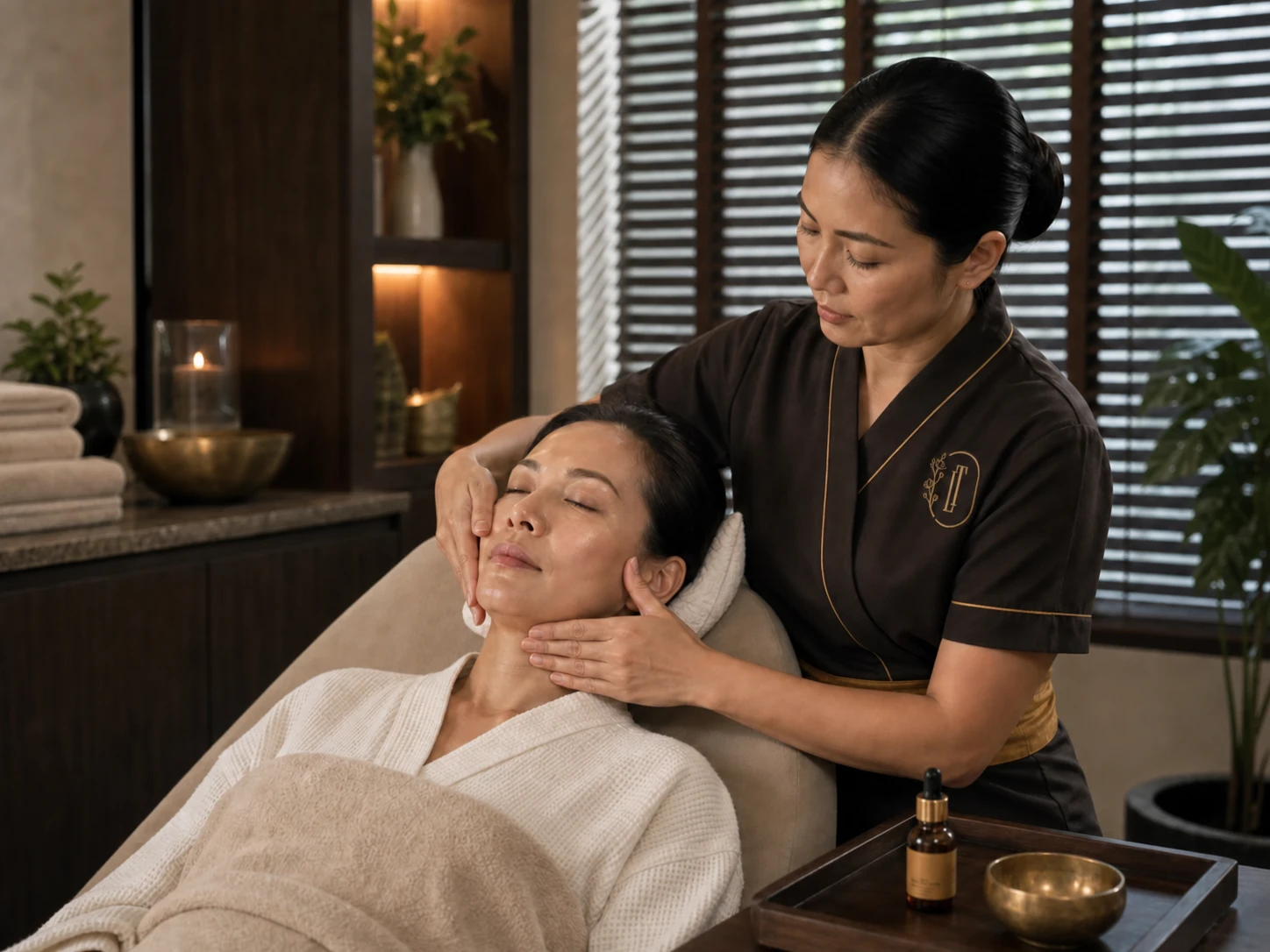
WATCH & LEARN
See the art and pace of professional facial massage at Loft Thai Spa
“Products support the skin through repeated daily use. Massage changes the experience of a facial—and may change appearance temporarily—without replacing that routine.”
Loft Thai Editorial Team
Continue your research
REFERENCES
Sources & further reading
- American Academy of Dermatology: A simple cleansing, moisturising and sun-protection routine
- PubMed: Facial massage roller, skin blood flow and vascular reactivity
- PubMed: Randomised comparison of facial roller and gua sha massage
- UK National Health Service: Medical manual lymphatic drainage in lymphoedema care
- American Academy of Dermatology: How to exfoliate safely
PRACTICAL GUIDANCE
Frequently Asked Questions
Is facial massage more important than skincare products?
No universal ranking is useful. Daily cleansing, moisturising and sun protection perform functions massage cannot replace. Massage can add relaxation, temporary warmth, movement and a different facial experience.
Can facial massage permanently lift the face?
Evidence does not support promising a permanent lift from a spa facial. Temporary contour or de-puffing changes may occur, but they depend on technique, soft tissue, fluid and individual response.
Does facial massage increase circulation?
A small study found a short-term increase in facial skin blood flow on the treated cheek after roller massage. That local finding should not be expanded into claims about whole-body circulation or disease treatment.
Can I have facial massage while using retinol?
Tell the therapist exactly what you use and whether the skin is peeling, burning or irritated. Massage and exfoliation may need to be reduced or postponed when the barrier is unsettled.
How often should I book facial massage in Bangkok?
There is no fixed evidence-based interval. Consider the skin’s recovery, treatment intensity, home routine, event timing and how long the comfort or appearance benefit lasts.
CONTINUE READING
Related stories

Facial Lymphatic Drainage in Bangkok: Benefits, What to Expect, and Who It’s For
Bangkok is a city that can be tough on the face—even if you’re doing “everything right.” Heat, humidity, air-conditioning, pollution, salty foods, late nights, long flights, screen time, and stress can all show up as puffiness, dullness, tension in the jaw,…
Read the guide
Facial Gua Sha: An In-Depth Guide to the Ancient Scraping Art for Modern Skin Health
Gua Sha literally “scraping sand” in Mandarin (刮痧) has existed for well over a millennium in East Asian medicine, where it was originally practiced on the body to dispel pathogenic “wind,” encourage circulation, and relieve stagnation. While full-body Gua Sha…
Read the guide
How Often Should You Get a Facial in Bangkok?
Bangkok is a city that constantly stimulates the senses, but for the skin, it can also be a demanding environment. The combination of humidity, pollution, intense sun exposure, and sudden transitions between outdoor heat and indoor air conditioning creates a…
Read the guide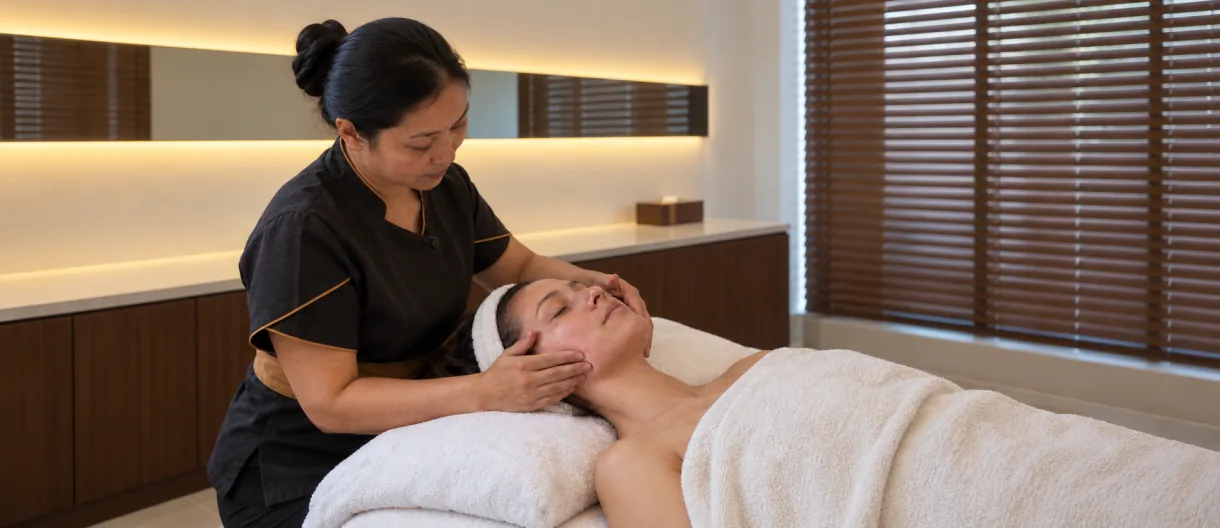
Facial Prices in Bangkok: 60, 90 or 120 Minutes at Loft Thai?
Comparing facial prices in Bangkok is easier when the treatment and the appointment length are considered together. Loft Thai's published menu starts at 1,800 THB for a 60-minute Classic Facial Treatment, but not every facial comes in every duration. This…
Read the guide