
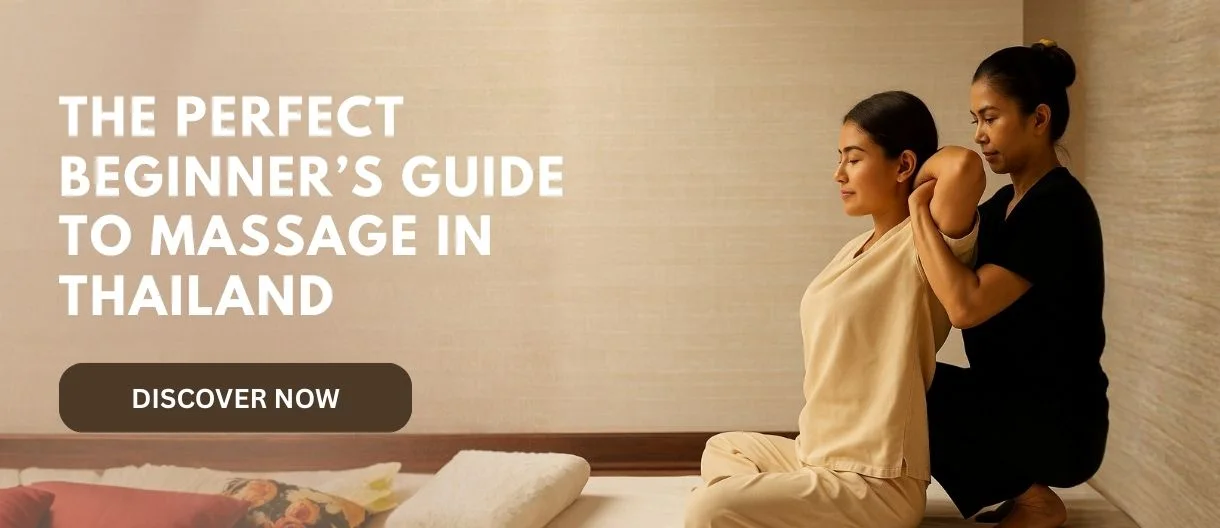
If this is your very first massage experience in Thailand, welcome — you are about to discover one of the greatest gifts Thai culture has shared with the world. Massage in Thailand isn’t just a relaxing activity to try on holiday. It is a deeply rooted wellness tradition passed down over centuries, designed to bring physical relief, emotional balance, and cultural connection.
And yet, for many first-time spa visitors, especially those who have never tried a massage anywhere before, the experience can feel a little overwhelming. What treatment should you choose? How strong should the pressure be? How do you politely communicate with the therapist if something feels uncomfortable, painful, or simply not what you expected?
At Loft Thai Spa, one of the leading boutique spas in Bangkok known for exceptional expertise and premium hospitality, we believe your first time should feel comfortable, guided, and tailored to your unique needs. This comprehensive guide will help you make confident choices — from selecting the perfect massage to expressing your preferences clearly in English or Thai — so you can have the most enjoyable and beneficial spa experience of your life.
Why Getting a Massage in Thailand Is a Must for Beginners
Thailand is the birthplace of Nuad Thai — Traditional Thai Massage — a UNESCO Intangible Cultural Heritage. Unlike Western massages focused mainly on muscles, Thai massage works on Sen energy lines, deep stretches, and mindful techniques. The result is:
- Better mobility
- Improved blood circulation
- Relief of muscle tension
- Reduced stress and anxiety
- Better sleep and posture
- Mental calm and emotional balance
Whether you’re here for shopping, business, or a romantic escape, taking time to relax your body helps you enjoy every moment of your trip — pain-free and energized.
Step 1: Understanding Your Needs — What Do You Want from Your Massage?
Every person arrives at a spa with different goals. Take a moment to identify yours:
- Do you want to sleep and relax?
- Do you feel soreness or pain from travel or work?
- Do you love gentle touch or strong pressure?
- Do you want a massage with oil (smooth) or without oil (more stretching)?
- Do you want a private room alone or share with a partner?
These answers will influence the ideal therapy for you. Let’s explore the options beginner-friendly first.
Step 2: Choosing Your First Massage at Loft Thai Spa
Here is a full breakdown of the most beginner-friendly treatments and what they are best for.
Foot Massage & Reflexology (Beginner Comfort Zone)
If you feel nervous about a full-body massage, start with a foot ritual. You remain fully dressed, comfortable, and seated or lying down.
Best for:
- Walking fatigue
- First massage ever
- Travelers & seniors
- Stress reduction
Therapists apply pressure to reflex points that correspond to organs and systems in the body — bringing balance and instant relief.
Aroma Oil Massage (Gentle, Relaxing & Perfect for Beginners)
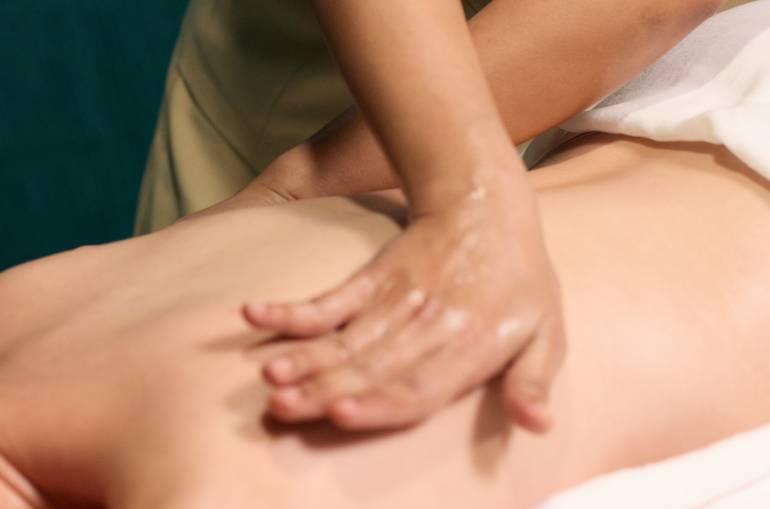
If your goal is deep relaxation or sleep — choose this. Warm oils glide over the skin with smooth strokes. It’s calming, sensual, and nurturing.
Best for:
- Jet lag
- Anxiety & tension
- Soft touch lovers
- Romantic couples
At Loft Thai Spa, aromatherapy oils are personalized with natural ingredients that soothe the nervous system.
Traditional Thai Massage or the Thai Warrior Massage (The True Cultural Experience)
No oils. More pressure. More stretching. The therapist uses thumbs, elbows, forearms, and body movement to open muscles and release tension along energy lines.
Best for:
- Chronic stiffness
- Tight muscles from sitting
- Active & athletic travelers
- Back, neck, and shoulder tension
Not recommended for very sensitive clients as a first-ever massage, unless pressure is soft — which is always possible.
Tip: Tell the therapist if stretching feels too strong — they will adjust.
Thai Herbal Compress Massage (Deep Healing, Warm & Comforting)
Steamed herbal pouches relieve inflammation, reduce muscle pain, and smell incredible. A great upgrade after a Thai massage.
Best for:
- Muscle soreness
- Office workers
- Body detox & relaxation
If you had a long flight — this is a top recommendation.
Head, Neck & Shoulder Massage (Short & Effective)
A wonderful option if you’re unsure how your body will react to massage.
Best for:
- Headaches
- Neck stiffness
- Stress relief in 30–45 minutes
Which Massage Should You Choose Based on Your Situation?
Here is a simple guide for first-timers:
- If you want relaxation → Aroma Oil Massage
- If you spend days walking → Foot Massage
- If you want Thai cultural experience → Traditional Thai Massage
- If your back is sore → Thai Massage + Herbal Compress
- If unsure or shy → Head, Neck & Shoulder Massage
When in doubt? Our therapists at Loft Thai Spa will ask the right questions to make sure the treatment fits your goals.
Step 3: Communicating Comfort — Your Voice Matters
Therapists are trained to observe your body reactions, but nobody knows your body better than you. Communication is key to a great massage.
Tell your therapist how you feel anytime:
- Too strong pressure
- Ticklish areas
- Painful spots
- Temperature discomfort
- Desire to sleep quietly
You can also guide them to focus on areas like:
- Lower back
- Shoulders
- Legs
- Feet
- Head
They love feedback — because it helps them serve you better.
Useful Thai Phrases for Beginners (With Pronunciation)
Here’s how to express your needs clearly during treatment:
Pressure Level
I want soft pressure: Bao Bao (เบา ๆ) — bow bow
Medium pressure: Pang Klang (ปานกลาง) — pahn-klahng
Strong pressure: Reng Reng (แรง ๆ) — rang rang
Comfort & Pain
It hurts: Jep (เจ็บ) — jeb
Too painful: Jep Mak (เจ็บมาก) — jeb maak
Not too strong: Mai Reng (ไม่แรง) — my reng
Preference
More here please: Tee Nee Noi (ที่นี่หน่อย) — tee-nee noy
No stretching: Mai Tong Yued (ไม่ต้องยืด) — my-tong-yued
I want to sleep: Yark Non (อยากนอน) — yark non
Beginning & Ending
Stop / pause: Yud Sak Khu (หยุดสักครู่) — yoot sak-kroo
Thank you: Khob Khun Ka/Khrap (ขอบคุณค่ะ/ครับ)
(ka for women, khrap for men)
Using just one or two of these words makes your therapist happy — it shows connection and cultural respect.
Step 4: What to Expect Before, During & After at Loft Thai Spa
From the moment you arrive, Loft Thai Spa ensures a well-being journey through all senses.
Before
Warm greeting, welcome drink, consultation, pressure preference assessment
During
Private suite, heated towels, calm aromas, skilled hands, soothing atmosphere
After
Relaxing tea service, calming moment before re-entering the city
Your focus?
Just breathe. Let go. Enjoy.
Step 5: Prepare Smart — Beginner Tips for the Perfect Experience
- Avoid heavy meal right before your session
- Turn your phone silent
- Use the restroom before treatment
- Drink water & warm tea afterward
- Rest your muscles after deep techniques
- Give gentle feedback anytime
And most importantly: No stress. Relax — you’re in expert hands.
If You Love Your First Massage… What Next?

Many travelers start with something simple then grow curious. At Loft Thai Spa, each time you return you can explore deeper rituals:
- Couple massages & romance packages
- Facials using premium skincare
- CBD oil treatments
- Head Spa & scalp therapy
- Royal full-body spa rituals
- Thai Warrior Massage by master practitioners
- HydraFacial with innovative Syndeo technology
Health becomes a journey — not just a moment.
Why Trust Loft Thai Spa for Your First Experience
Not all spas provide equal expertise. Loft Thai Spa stands out for:
- Certified therapists trained at Nuad Thai School
- Award-winning recognition among top spas in Bangkok & Asia
- Only premium oils & herbal compress ingredients
- Quiet private suites for relaxation
- Cultural rituals paired with modern luxury
We take pride in caring for first-timers because your first experience defines how you view wellness forever.
Your First Time Should Feel Safe, Relaxing & Memorable
When you travel — your body travels too. And it deserves care, comfort, and appreciation. Let this be the beginning of a healthier, happier, more connected version of yourself.
At Loft Thai Spa, we will guide you step-by-step so nothing feels confusing or intimidating. You simply show up — we take care of the rest.
Are You Ready for Your First Massage in Thailand?
Whatever your age, background, or body type — massage is for you. You don’t need experience. You don’t need to be flexible. You just need to be open to feeling good.
Say your first Thai word today:
Suk San (สุขสันต์) → “Happy & Joyful”
That is our wish for you — from the first touch to the last moment of your session.
UPDATED LOFT THAI GUIDE
Additional guidance and current information
The following editorial update expands on the original Loft Thai article with practical context, current treatment guidance and further reading.
Make Six Decisions Before Choosing a Treatment Name
A menu becomes easier when you decide what you want to wear, whether you are comfortable with oil on the skin, which body areas may be touched, how much movement you want, whether you prefer a private room and how long you can relax without watching the clock.
A receptionist or therapist should be able to turn those answers into two or three suitable options. You do not need a diagnosis or a perfect wellness goal.
Say clearly if this is your first massage. That information should lead to more explanation and a conservative starting pressure, not a scripted beginner package.
- Clothed or oil-based
- Full body or one focused area
- Still and gliding or more positional movement
- Gentle, medium or firmer pressure
- Individual or shared room
- Short introduction or unhurried full session
Four Useful Starting Points
Traditional Thai massage is generally clothed and oil-free, with rhythmic pressure and supported movement. It is a meaningful introduction to Nuad Thai, which UNESCO recognised as intangible cultural heritage in 2019, but the treatment can still be gentle and adapted.
Aroma oil massage uses glide on exposed areas with professional draping. It often involves fewer large position changes and may suit a guest who wants a quieter format, provided the oil and fragrance are acceptable.
Foot massage limits the treatment area and can feel easier for someone uncertain about full-body touch. Head, neck and shoulder work is another focused option, although pressure around a sensitive neck or active headache still needs discussion.
- Traditional Thai: clothed, oil-free, pressure and supported movement
- Aroma oil: draped, gliding and product-based
- Foot massage: focused area with minimal changing
- Head, neck and shoulders: shorter, focused upper-body option
Treatments That Need More Conversation
Thai Warrior, deep tissue, sports massage and long assisted-stretching sequences may be excellent choices for some guests, but their stronger names should not make them automatic first-session upgrades.
Herbal compress, hot stone and other heated treatments add temperature and product considerations. Cupping may leave temporary marks. Each can be appropriate when the guest understands the method and the spa has screened relevant risks.
A first visit is not the moment to combine every modality. One clear treatment gives you useful feedback about pressure, positioning and how your body responds.
Ask About Clothing, Draping and Privacy
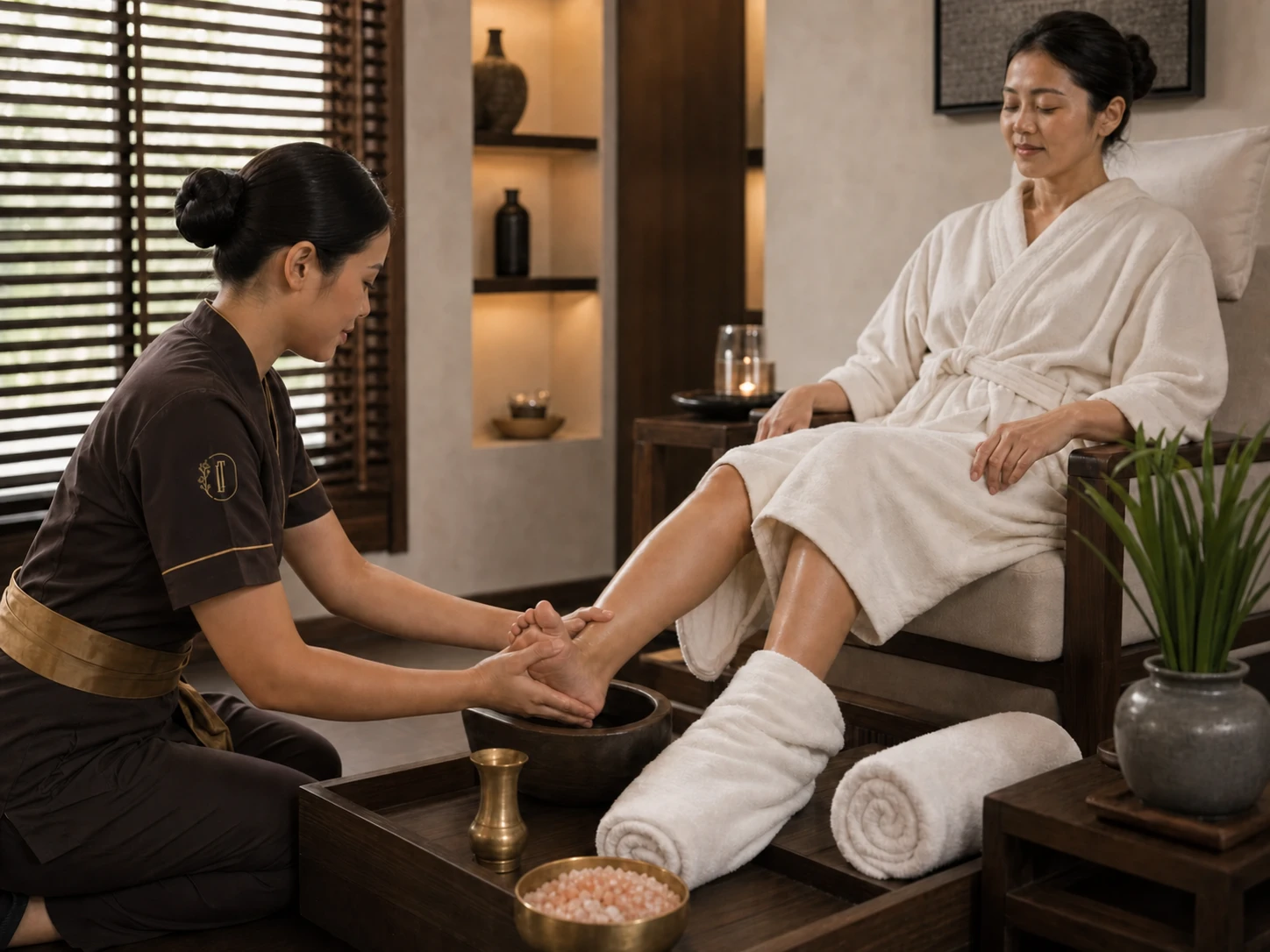
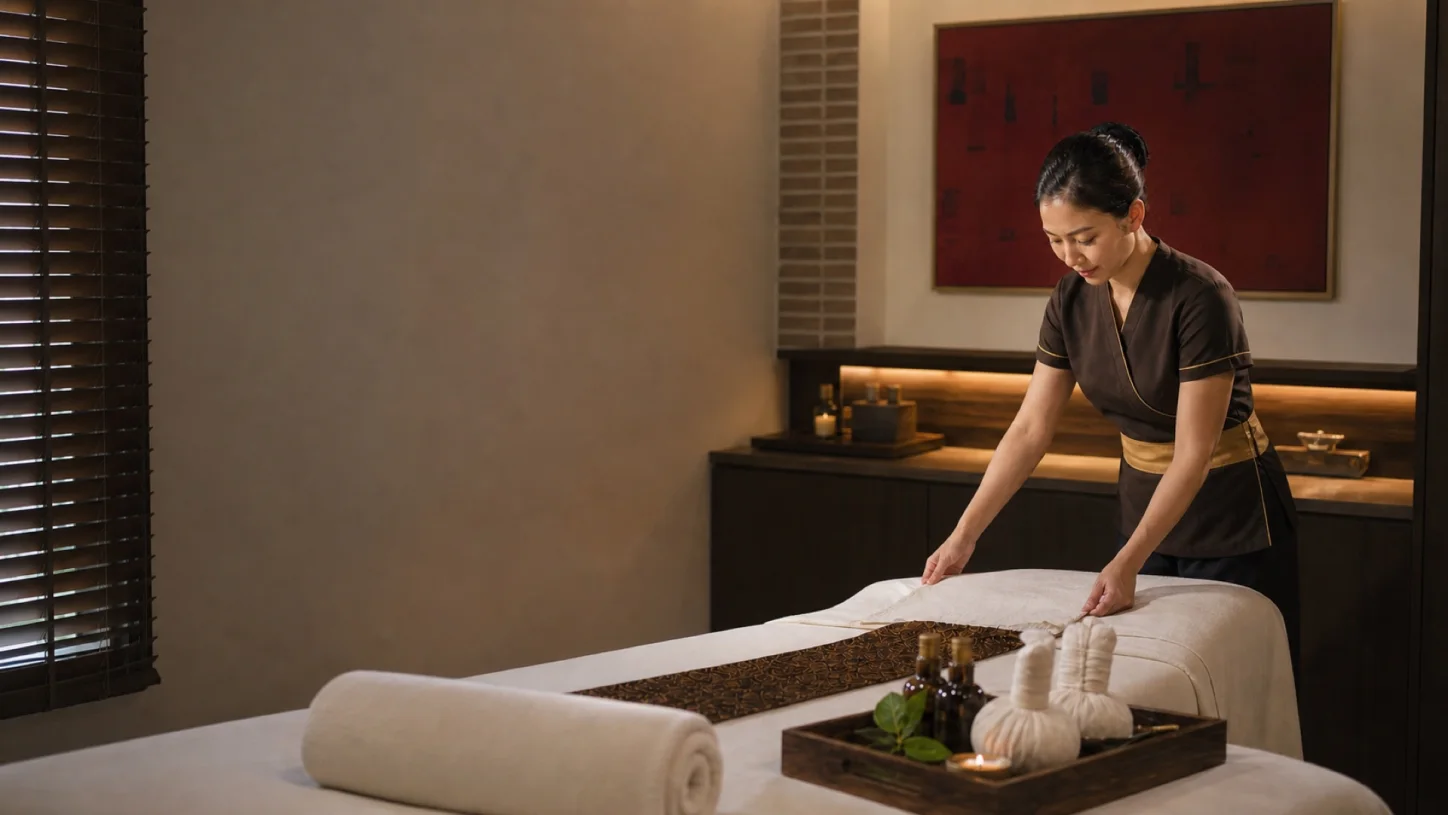
Traditional Thai massage commonly uses loose clothing supplied by the spa. Oil massage usually requires undressing only to the level explained, with the body covered and one treatment area exposed at a time.
Ask whether the room is private, whether a companion can share it and whether you can request a therapist of a particular gender. These are ordinary service questions.
Consent is continuous. You can decline work on the abdomen, glutes, chest, scalp, feet or any other area without having to justify the decision.
Start Below Your Maximum Pressure
Pressure is easier to increase than to undo. Begin at light or medium, allow the therapist to establish contact and then request more only if the sensation remains comfortable.
Broad intensity can feel substantial, but sharp pain, tingling, numbness, instability, breath-holding or panic are reasons to stop. A massage is not an endurance test.
Simple English is enough: “softer,” “stop,” “no stretching,” “not there” or “more here.” A hand signal agreed before the session can help when language or silence makes speaking awkward.
Share Health Context Before the Treatment
Tell the spa about pregnancy, recent surgery, fracture, joint replacement, osteoporosis, blood-thinning medication, clot history, acute injury, significant medical conditions, allergies and recent cosmetic procedures.
Fever, contagious skin problems, unexplained swelling, chest pain, breathing difficulty, sudden weakness, severe pain or neurological changes require appropriate medical assessment rather than massage.
The US National Center for Complementary and Integrative Health describes massage risk as generally low but notes rare serious adverse events, sometimes after vigorous work or in people at higher risk. Screening and adaptation matter.
What to Expect from Arrival to Tea
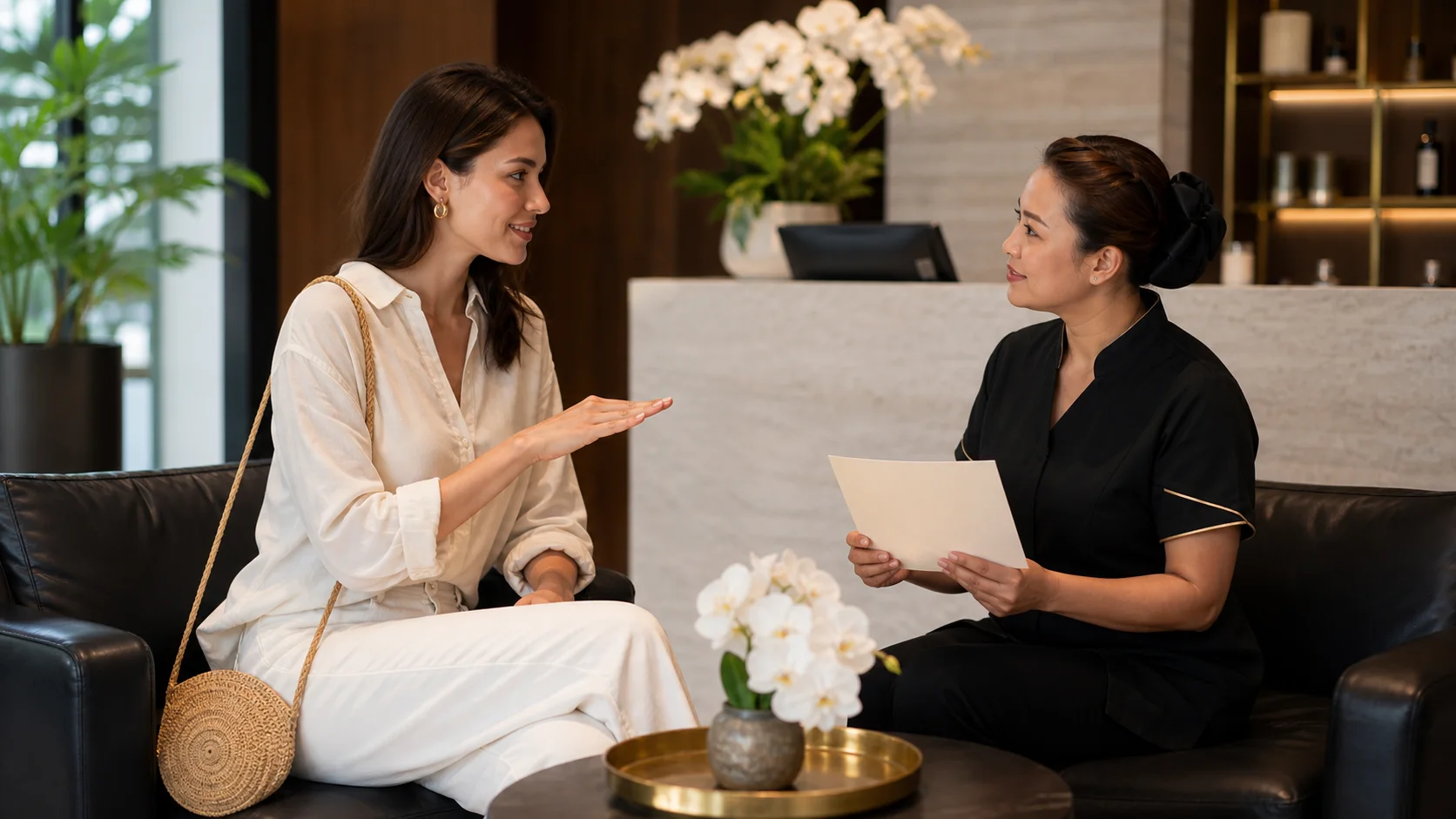
Arrive early enough to read the menu, use the restroom and complete a private consultation. Confirm the exact service, duration, price and any products or heat before entering the room.
The therapist should explain changing and positioning. During the session, feedback is welcome. Silence is an option, not a requirement.
Afterwards, rise slowly and take a moment before returning to Bangkok traffic. Normal hydration and meals are sufficient; you do not need a detox ritual.
-
01
Confirm
Check treatment, duration, price, clothing, room and products.
-
02
Consult
Share first-time status, health context and touch preferences.
-
03
Adjust
Change pressure, position or treatment area whenever needed.
-
04
Review
Notice how you feel before deciding what to try next time.
Enjoy the Experience Without a Medical Promise
Massage may feel relaxing or provide short-term comfort for some people. Evidence varies by condition, and a wellness session does not diagnose the cause of pain.
Foot pressure does not prove a corresponding internal organ is being treated. Aroma oil does not cure jet lag or anxiety. Herbal heat does not detoxify the body, and stronger Thai massage does not automatically correct posture.
A first massage can still be memorable without those claims: skilled touch, privacy, attention and an hour that feels genuinely yours.
Use the First Session as Information
After the appointment, note which pressure, pace, areas and positions felt good and which did not. That is more useful than deciding the whole style was either perfect or wrong.
On a later visit, you might extend the same treatment, try a related format or keep the service unchanged and request a different focus. There is no obligation to progress toward stronger work.
A consistent spa should record preferences carefully while still checking them again, because bodies and circumstances change.
Begin with Clarity
Thailand offers a wide massage vocabulary, but a beginner needs only a clear format, a competent practitioner and permission to speak.
Choose by clothing, oil, movement, touch area and privacy. Start conservatively, keep consent active and let the first session be an introduction rather than a test.
“The best first massage is the one you understand well enough to change.”
Loft Thai Editorial Team
Continue your research
REFERENCES
Sources & further reading
PRACTICAL GUIDANCE
Frequently Asked Questions
What is the easiest massage for a complete beginner?
Foot massage is a focused option, while aroma oil can suit guests who prefer glide and fewer position changes. A gentle traditional Thai session is also possible.
Do I need to remove clothing?
Traditional Thai massage is usually performed through loose clothing. Oil massage uses professional draping; the spa should explain exactly what to remove.
Can I ask the therapist to stop?
Yes. Consent is continuous, and you can stop or change pressure, position or treatment area at any time.
Should my first massage be strong?
No. Starting with light or medium pressure makes it easier to understand your comfort level and increase gradually.
How long should a first massage last?
Choose a duration you can enjoy without rushing. Sixty minutes can be a useful introduction; longer sessions provide more time but should not mean more force.
CONTINUE READING
Related stories
The Art of Authentic Thai Massage: A Holistic Journey of Healing
In the heart of Bangkok, where tradition meets modern sophistication, the art of Thai massage continues to thrive — not merely as a spa treatment, but as a cultural treasure and holistic wellness philosophy that has endured for over 2,500 years. Today, Thai…
Read the guide
Bangkok Spa Etiquette: Tipping, What to Wear, What to Say to Get the Pressure You Want in 2026
Booking a spa in Bangkok should feel exciting—not confusing. But if it’s your first time Thai massage or oil massage, it’s normal to wonder about the unspoken rules. Do you tip? How much? What do you wear? Do you keep underwear on? And how do you ask for the…
Read the guide
Top 10 Luxury Spas in Bangkok for High-End Wellness Experiences in 2026
Bangkok is one of the rare cities where “high-end wellness” isn’t only about marble lobbies and expensive menus—it’s about therapist skill, heritage techniques, privacy, and consistency. If you’re investing in a luxury spa day (for recovery, stress relief, jet…
Read the guide
Best Spa in Bangkok (2026 Guide): How to Choose a Luxury Spa That’s Actually Worth It
Bangkok has thousands of massage shops, day spas, hotel spas, and “luxury” venues that look premium in photos but feel rushed in real life. If you’ve ever walked out of a treatment thinking, “That was nice… but was it actually worth it?”—you’re not alone.
Read the guide