
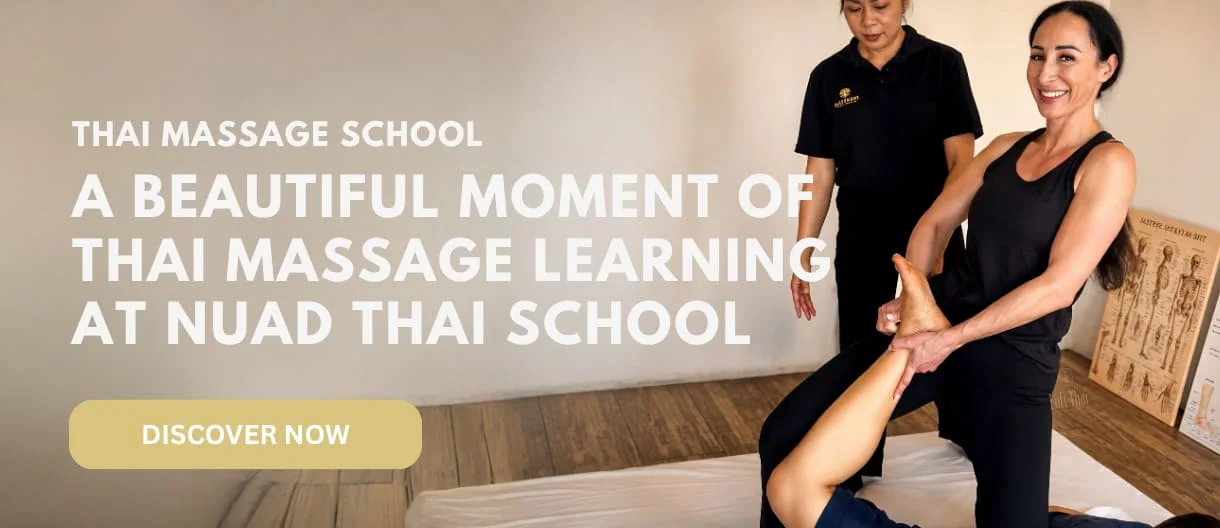
When someone travels across the world to learn Thai massage in Bangkok, they are not simply booking a class. They are choosing to enter a culture, a tradition, and a way of understanding the body that has been passed from generation to generation. At Loft Thai Spa and Nuad Thai School, we have always believed that Thai massage is more than a treatment. It is a living heritage, a professional discipline, and a deep human connection between teacher, therapist, and guest.
This is why we are deeply grateful to Dr. Shelly Seidenberg for visiting Nuad Thai School in Bangkok and sharing her experience with her YouTube community. Her video beautifully showcases the spirit of our school, the dedication of our instructors, and the authenticity of learning traditional Thai massage directly in Thailand.
Dr. Shelly Seidenberg, known on YouTube as @DrShellySeidenberg, has built an impressive community of more than 232,000 subscribers and has published over 526 videos. Her channel is followed by people who enjoy chiropractic content, bodywork, wellness, and educational videos about the human body. With her warm personality and professional background, her visit to Nuad Thai School was not only meaningful for us, but also a wonderful opportunity to show how Thai massage can inspire wellness professionals from around the world.
In her video description, Dr. Shelly shared that she attended Nuad Thai School in Bangkok and had an incredible experience learning traditional Thai massage from three expert therapists. She also mentioned something very important for international students: choosing a training program from the other side of the world is not easy. When someone is planning to travel to Thailand for a private massage course, they need trust, clarity, professionalism, and confidence that the training will match their expectations. We are honored that Dr. Shelly felt her private training was exactly what she was looking for.
Her recommendation means a lot to us. She wrote that if someone is interested in learning Thai massage, she “100%” recommends checking out Nuad Thai School. For our entire team, this kind of feedback is more than a compliment. It is a reflection of the hard work, discipline, and passion that our instructors put into every class.
At Loft Thai Spa, we are often recognized as an award-winning spa in Bangkok, known for our high-quality treatments, authentic Thai massage, premium wellness experiences, and professional therapists. However, many guests and international visitors are sometimes surprised to discover that Loft Thai Spa is not only a spa. Behind our treatments, our service standards, and our reputation, there is also a strong educational foundation: Nuad Thai School, our massage school and spa training center.
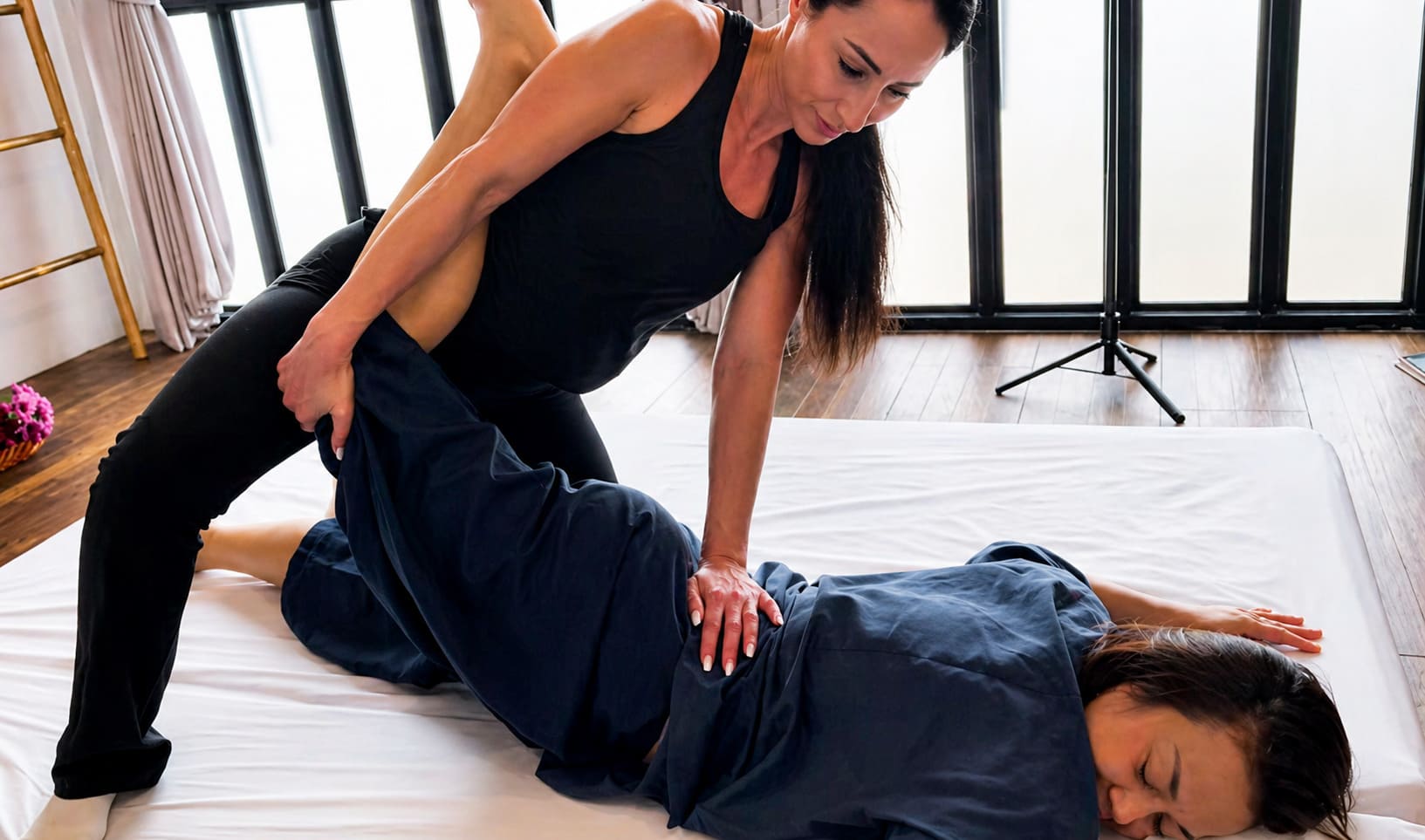
Nuad Thai School was created with the mission of preserving and transmitting authentic Thai massage knowledge. Our goal is not only to teach movements, sequences, or techniques. We want students to understand the philosophy behind Thai massage, the importance of body mechanics, the respect for the receiver, and the professional attitude required to work in the wellness and spa industry.
Every year, many therapists come to train with us. Some are complete beginners who want to discover Thai massage for personal knowledge or future career opportunities. Others are already working in spas, wellness centers, clinics, hotels, resorts, or private practices and want to improve their skills. We also train therapists who go on to work in luxury five-star hotels and spas around the world. For us, this is one of the most meaningful parts of our mission: helping Thai massage knowledge travel internationally while keeping its original spirit alive.
The training experience at Nuad Thai School is designed to be both professional and personal. Dr. Shelly’s visit showed this perfectly. A private Thai massage training session gives students the opportunity to learn directly from experienced instructors, ask questions, receive correction, and practice in a focused environment. Unlike large group classes where individual attention may be limited, private training allows the teacher to adapt the rhythm and content to the student’s level, background, and goals.
This is especially important for professionals like Dr. Shelly, who already have a strong understanding of the body through chiropractic practice and wellness education. When students already have experience in bodywork, they often want to go deeper into pressure, alignment, stretching, transitions, and therapeutic intention. Our instructors can adjust the class accordingly, giving more technical explanations and helping the student connect Thai massage principles with their existing knowledge.
Traditional Thai massage is a unique art. It combines pressure, stretching, mobilization, rhythm, breathing, and awareness of energy lines. It requires not only strong hands, but also good posture, controlled movement, and sensitivity. A good Thai massage therapist does not simply apply force. The therapist listens through the hands, feels the body’s response, and works with balance, flow, and intention.
At Nuad Thai School, we believe that technique and mindset must be taught together. Students learn how to use their body weight instead of relying only on muscular strength. They learn how to protect their own posture while giving a treatment. They learn how to move around the client smoothly, how to transition from one position to another, and how to maintain a calm, respectful, and professional presence throughout the session.
This is one of the reasons why Thai massage training in Thailand is so valuable. Learning from books or online videos can be useful, but nothing replaces direct correction from experienced therapists. A teacher can immediately see if the student’s angle is wrong, if the pressure is not well distributed, if the movement is uncomfortable, or if the sequence does not flow naturally. This type of correction is essential for anyone who wants to offer safe, effective, and professional Thai massage.
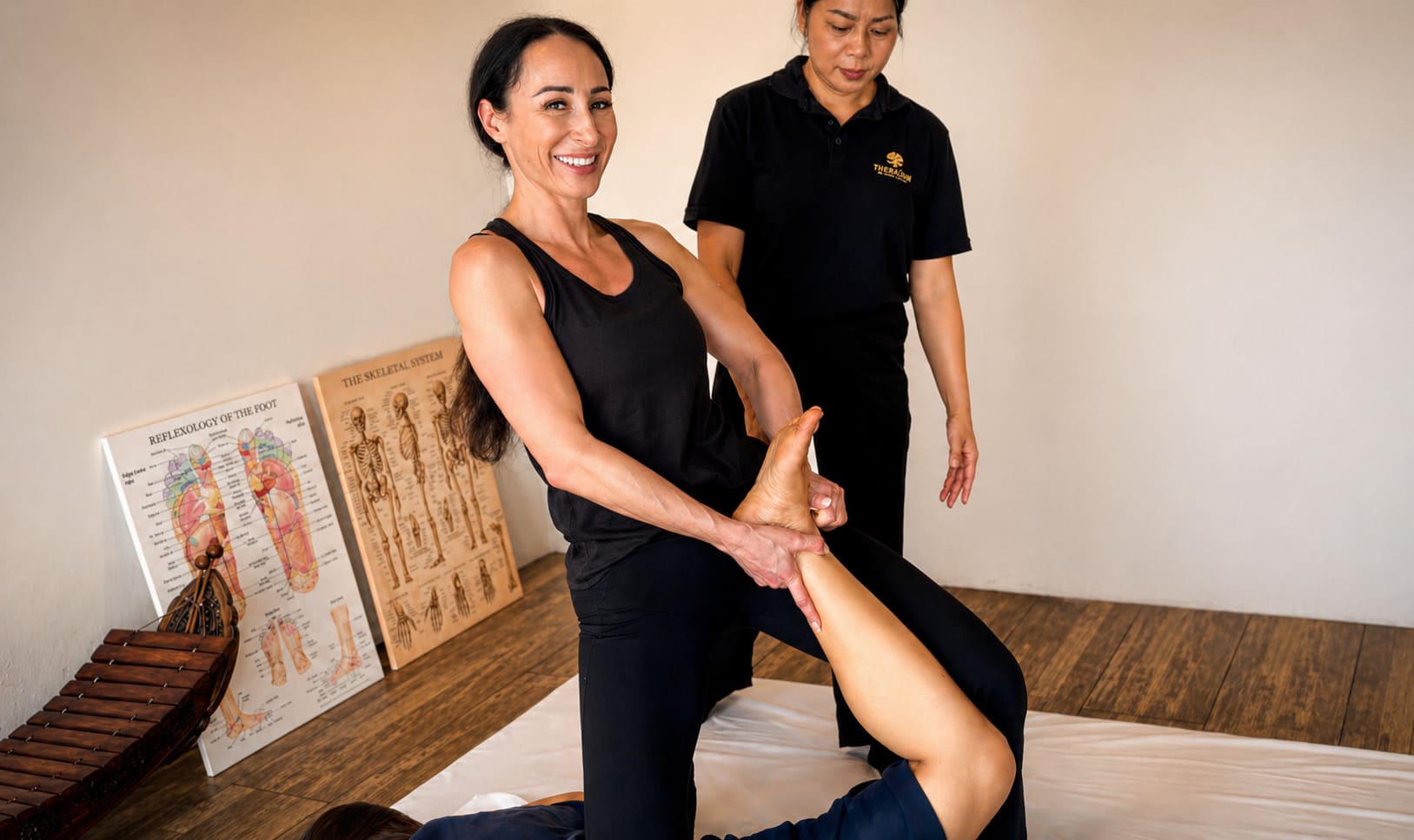
Dr. Shelly’s video also highlights something we are very proud of: the human warmth of our team. At Nuad Thai School and Loft Thai Spa, we want every student to feel welcomed, supported, and respected. Many international students travel alone to Bangkok for training, and for some, it is their first time in Thailand. We understand that this can feel exciting but also a little intimidating. That is why we pay attention not only to the course content, but also to the overall experience.
From the first contact to the final certificate, we try to guide each student clearly. We explain the training options, the schedule, the level required, and the practical details. During the class, our instructors and assistants help make the learning experience smooth and comfortable. For many students, this becomes more than a course. It becomes a memory of Thailand, a connection with Thai culture, and sometimes the beginning of a new professional journey.
Loft Thai Spa’s connection with Nuad Thai School is also a major advantage for students. Because we operate real spa branches in Bangkok, our training is not disconnected from professional practice. Our instructors understand what happens in real treatment rooms, with real guests, real expectations, and real service standards. The techniques taught at Nuad Thai School are not only traditional; they are also adapted to the reality of spa operations, guest comfort, therapist ergonomics, and luxury hospitality.
This is one of the reasons our training is valuable for therapists who want to work in high-end spas and five-star hotels. In luxury hospitality, technique alone is not enough. A therapist must understand punctuality, hygiene, communication, guest care, room preparation, pressure adjustment, privacy, and emotional intelligence. The best spa experience is created not only by what the therapist does with their hands, but also by how they makes the guest feel from the beginning to the end of the treatment.
At Loft Thai Spa, we have spent years developing a professional environment where therapists can grow. Training is part of our culture. We believe that therapists should never stop learning. Whether they are beginners, senior therapists, trainers, or spa managers, continued education is essential to maintain high standards. Nuad Thai School is the natural extension of this philosophy.
We are proud to train therapists who may later work in Thailand, Europe, the Middle East, Asia, or anywhere in the world. Thai massage has become one of the most respected wellness traditions internationally, and with that popularity comes a responsibility. It must be taught correctly. It must be practiced safely. It must be represented with dignity.
This is why we are so touched when professionals like Dr. Shelly Seidenberg choose to share their experience with honesty and enthusiasm. Her audience follows her because they trust her knowledge, her curiosity, and her way of explaining bodywork. When she shows her training experience at Nuad Thai School, she helps people understand that Thai massage is not just a relaxing treatment. It is a serious practice, a professional skill, and a beautiful expression of Thai wellness culture.
Her video also helps future students who may be searching from abroad. As she mentioned, choosing a program from the other side of the world is not easy. Many people wonder whether the course will be professional, whether the instructors will be experienced, whether the communication will be clear, and whether the training will be worth the trip. Seeing a real student experience, especially from someone with a strong professional background, can give them confidence.
For that, we sincerely thank Dr. Shelly. Thank you for your trust. Thank you for your kindness. Thank you for taking the time to film, edit, and share your experience with your community. Thank you for presenting Nuad Thai School and Loft Thai Spa in such a positive and authentic way. Your video means a lot to our instructors, our therapists, and our entire team.
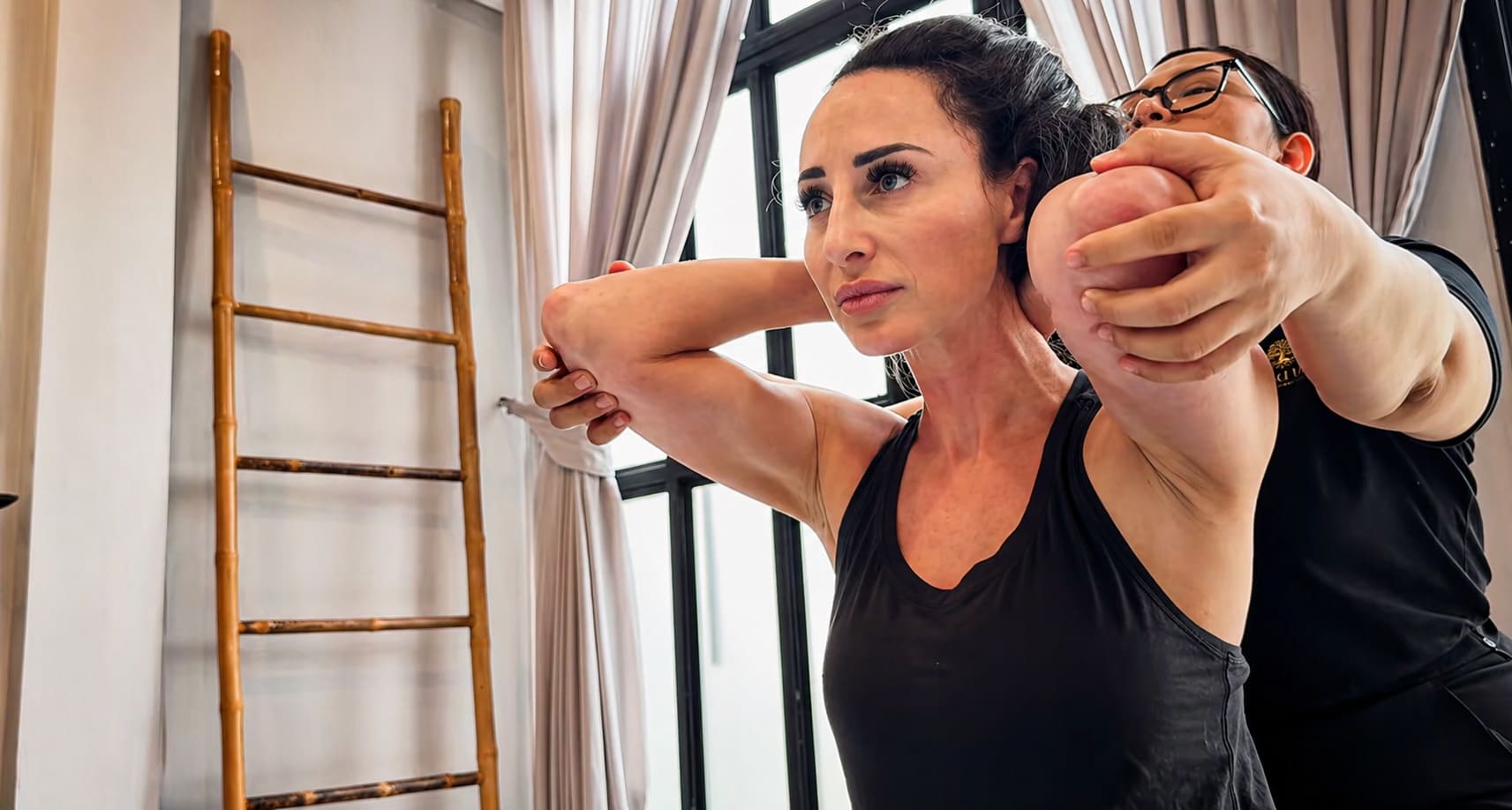
We also want to thank the three expert therapists who trained Dr. Shelly during her private course. Their dedication represents the heart of Nuad Thai School. Behind every good class, there is preparation, patience, experience, and passion. Teaching Thai massage requires generosity. It requires the ability to explain, demonstrate, correct, encourage, and adapt. We are proud of our instructors and grateful for the way they represent our school.
For students who are interested in learning Thai massage in Bangkok, Nuad Thai School offers different private training options depending on experience level and goals. Some students want an introduction to traditional Thai massage. Others want to focus on deeper pressure, stretching, herbal compress massage, oil massage, facial massage, spa treatments, or professional therapist development. Because every student has a different background, our private courses can be adapted to provide the most relevant experience.
Beginners can learn the foundations of Thai massage in a structured and accessible way. They can discover basic postures, safe pressure techniques, simple sequences, and the principles of working with the body respectfully. Professionals can go further into flow, precision, advanced transitions, therapist ergonomics, and treatment quality. Spa owners and managers can also benefit from understanding training standards, service protocols, and therapist development.
This flexibility is one of the strengths of Nuad Thai School. We welcome students from many countries, many cultures, and many professional paths. Some come for one day, some for several days, and some return for additional training. The goal is always the same: to provide a serious, authentic, and inspiring learning experience in Bangkok.
At the same time, students can discover Loft Thai Spa, our award-winning spa, where the same dedication to quality can be experienced through professional treatments. Loft Thai Spa is known for Thai massage, spa rituals, facial treatments, body treatments, and a refined wellness atmosphere. The spa and the school support each other. The spa gives life to the training, and the school strengthens the standards of the spa.
This connection makes Loft Thai Spa different. We are not only offering massage services; we are actively contributing to the education and development of therapists. We are not only welcoming guests; we are training the professionals who will carry Thai massage into the future. We are not only preserving tradition; we are helping it evolve with professionalism, international standards, and respect for its cultural roots.
Dr. Shelly Seidenberg’s visit is a beautiful example of this mission. A chiropractic professional from abroad came to Bangkok, trained with our team, experienced Thai massage from the inside, and shared that experience with hundreds of thousands of people. This is exactly the kind of cultural and professional exchange that makes our work meaningful.
Thai massage is part of Thailand’s identity. It is a bridge between wellness, tradition, anatomy, movement, and human care. When international professionals come to learn it seriously, they help protect its value. They become ambassadors of the practice, carrying its principles into their own communities. This is why every student matters to us.
To Dr. Shelly, we would like to say once again: thank you. Thank you for choosing Nuad Thai School. Thank you for trusting our team. Thank you for recommending us to your audience. Thank you for showing the world that learning Thai massage in Bangkok can be a powerful, joyful, and unforgettable experience.
We hope your video inspires many others to discover the beauty of Thai massage, not only as a treatment but as a skill, a tradition, and a professional path. We also hope it encourages people to understand that Loft Thai Spa is much more than a spa. It is a place where wellness is practiced, taught, shared, and passed on.
For anyone interested in learning Thai massage in Thailand, Nuad Thai School welcomes students from around the world. Whether you are a beginner, a therapist, a wellness professional, a spa owner, or simply someone passionate about bodywork, our team will be happy to guide you. Bangkok is one of the best places in the world to learn Thai massage, and we are proud to offer private training with experienced instructors in a professional and caring environment.
Dr. Shelly’s experience reminds us why we do what we do. Every class is an opportunity to share knowledge. Every student is a new story. Every training session is a chance to honor Thai massage and bring it to the world with excellence.
From all of us at Loft Thai Spa and Nuad Thai School: thank you, Dr. Shelly Seidenberg. We are truly grateful, and we look forward to welcoming more passionate students who want to experience the art of Thai massage in its home country.
UPDATED LOFT THAI GUIDE
Additional guidance and current information
The following editorial update expands on the original Loft Thai article with practical context, current treatment guidance and further reading.
A Student Story, Not a Perfect Demonstration
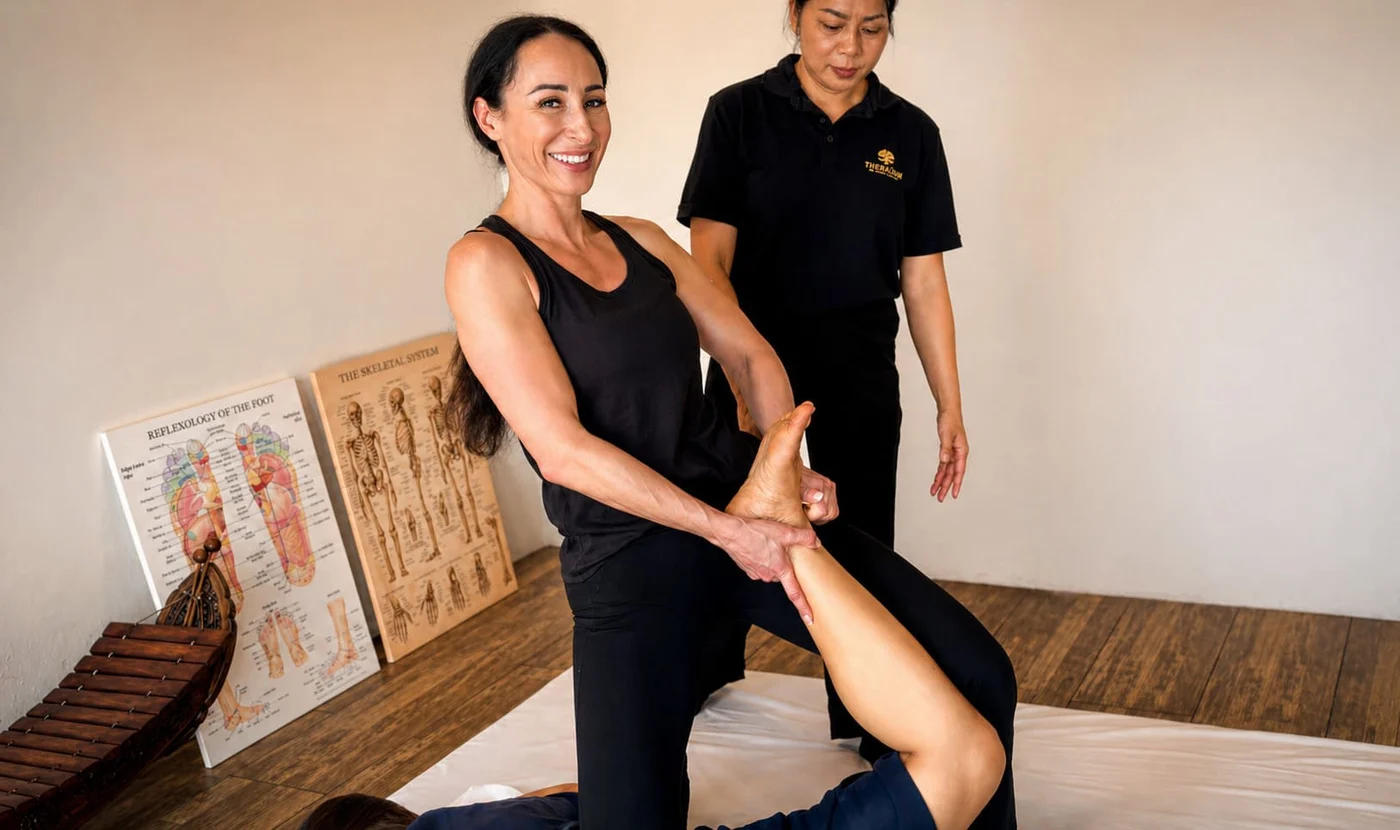
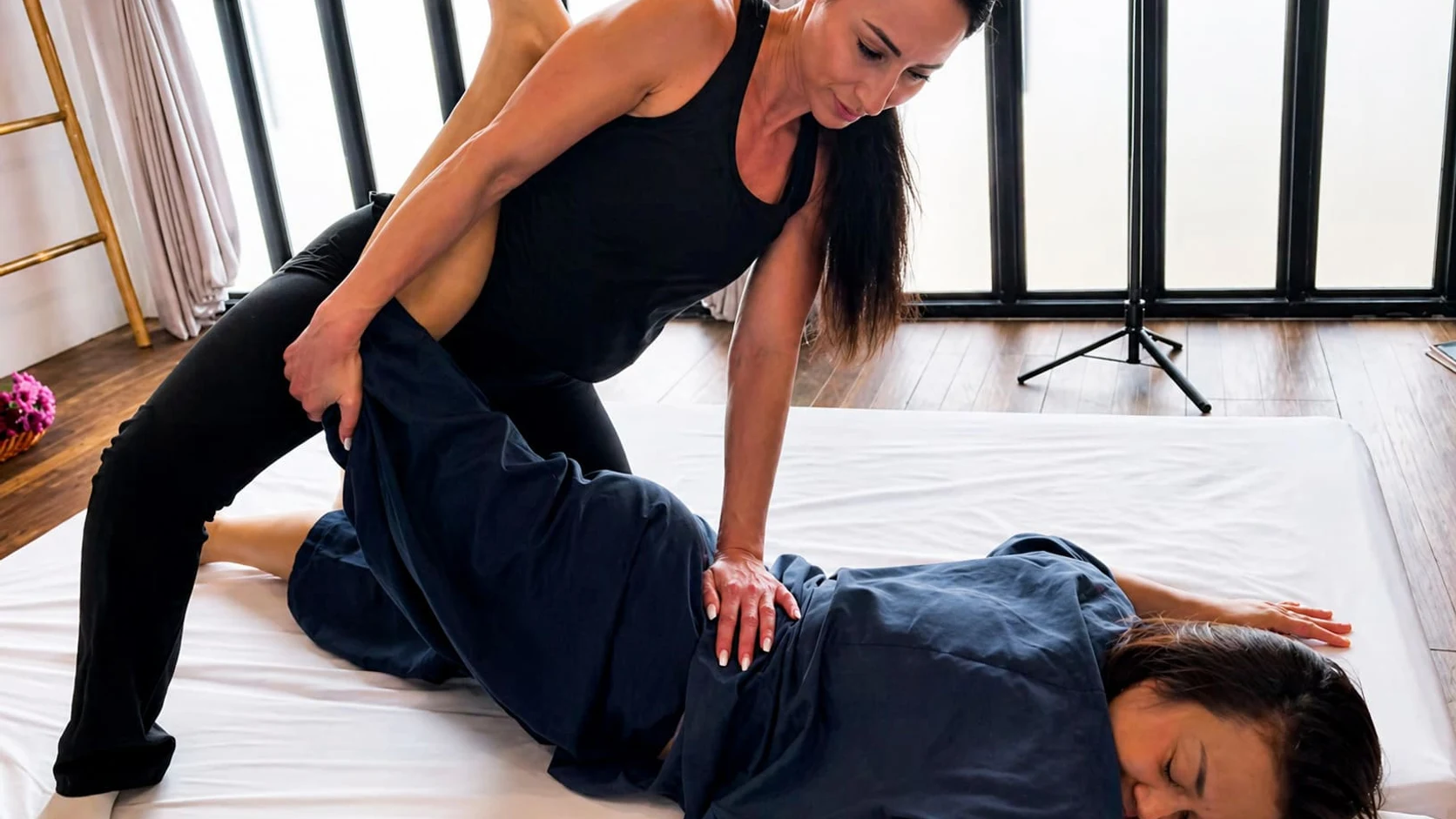
The photographs and video preserved with this article document Dr. Shelly Seidenberg during a private course at Nuad Thai School in Bangkok. They show a learner working directly with instructors and a practice model, repeating assisted positions and receiving correction in real time. That makes the session useful to watch: it is an honest learning process rather than a polished treatment-room performance.
A short film cannot prove every detail of a school or turn one student’s experience into a universal recommendation. It can, however, reveal the texture of practical teaching. The learner changes position, tests leverage, watches the receiver and listens while an instructor stands close enough to intervene.
The school’s own account thanks Dr. Shelly for sharing the visit publicly and describes the training as private and hands-on. This article keeps that documented core while removing unverified audience statistics, promotional superlatives and promises that a single course can create professional mastery.
Why Thai Massage Has to Be Learned by Touch
Thai massage contains shapes that look clear in a photograph: a bent leg, a supported twist, a palm placed beside the spine. The important information is less visible. The learner must discover how much body weight is being transferred, which direction respects the joint, whether the receiver is guarding and how the next movement begins without a jolt.
An instructor can see when the student is reaching with the shoulders instead of moving from a stable base. A practice model can explain that the pressure feels sharp even when the pose appears correct. This two-way feedback is what turns visual imitation into practical understanding.
Books and videos remain valuable for revision, vocabulary and sequence memory. They are not a substitute for supervised contact. A camera cannot feel pressure, and a learner cannot reliably judge every angle from their own side of the movement.
What the Instructor Is Actually Correcting
The most useful correction is often modest. Moving a knee a few centimetres can improve balance. Changing the palm angle can distribute pressure more broadly. Bringing the practice model closer can reduce strain in the learner’s lower back. None of these adjustments looks dramatic, yet together they shape comfort and control.
Timing matters as much as position. Traditional Thai massage is not a series of isolated stretches performed as quickly as possible. The therapist needs a steady rhythm, clear transitions and enough pause to notice how the receiver responds.
Communication also belongs inside technique. Before assisted movement, the learner should explain what will happen and confirm that the receiver is comfortable. During practice, the instructor can model concise questions that preserve calm without treating silence as automatic consent.
- Stable knees, hips and shoulders before adding pressure
- Broad contact before focused thumb or elbow work
- Joint direction that follows the receiver’s comfortable range
- Smooth transitions with no sudden pull or drop
- A clear way to reduce, change or stop the technique
Body Mechanics Protect Both Learner and Receiver
A therapist who relies on arm strength alone may tire quickly and overwork the wrists, thumbs or lower back. Training therefore pays close attention to stance, distance and the use of controlled body weight. The goal is not to make pressure heavier. It is to make it more stable and easier to adjust.
For the receiver, good mechanics usually feel more predictable. Broad pressure arrives gradually, the therapist remains balanced and a supported limb does not wobble while changing position. The receiver can relax because the movement feels guided rather than forced.
For the learner, sustainable mechanics create room to pay attention. When the practitioner is not fighting their own posture, they can observe breathing, facial expression and muscular guarding. Those observations are not a medical diagnosis; they are practical cues to slow down, ask a question or choose a gentler direction.
-
01
Set the base
Position the knees, feet or hips so the learner is stable before touching the receiver.
-
02
Make broad contact
Establish a calm, comfortable point of contact before transferring body weight.
-
03
Add pressure gradually
Increase intensity in small stages and avoid dropping weight suddenly into the body.
-
04
Watch and ask
Use the receiver’s feedback and visible response to adjust range, angle and pace.
-
05
Exit with control
Return the limb or body area gently and prepare the next transition before moving.
Cultural Heritage and Professional Practice Belong Together
UNESCO inscribed Nuad Thai on the Representative List of the Intangible Cultural Heritage of Humanity in 2019. Its description presents Thai massage as knowledge and practice transmitted through families, schools, associations and professional settings. A course in Bangkok therefore sits within a living tradition, not a decorative theme.
Respecting that heritage means learning more than a branded sequence. Students should understand the Thai context, the role of rhythm and mindful touch, and the responsibility that comes with representing the practice outside Thailand.
Modern professional standards add a second layer: hygiene, service information, screening, privacy, consent and the ability to refer a concern beyond the spa’s scope. These elements do not weaken tradition. They help the practitioner carry it into a contemporary treatment room with clarity.
What Private Training Changes
A private course gives the instructor more time to observe one learner’s habits. An experienced bodyworker may need help adapting familiar anatomy knowledge to Thai floor work. A complete beginner may need slower repetition and more explanation of basic positions. The format can respond to both without asking the group to move at one pace.
Individual attention does not make the course automatically better. Quality still depends on the instructor, curriculum, practice time and honesty about what can be achieved. A focused private day can establish or refine a defined sequence; it cannot replace the repetition required for confident professional work.
Before reserving, students should describe their background, language needs, physical limitations and intended use of the training. They should also confirm course duration, model arrangements, certificate conditions and whether the content can be adapted to their level.
Safety Is a Skill, Not a Disclaimer
Thai massage training should teach when not to use a technique. Recent injury or surgery, pregnancy, osteoporosis, anticoagulant use, skin infection, fever, unexplained swelling, loss of sensation and current medical restrictions can all require modification, postponement or assessment by an appropriate clinician.
Pain is not a badge of authenticity. Sharp, electric, burning or numbing sensations call for an immediate stop or change. The learner also needs permission before pressure on sensitive areas, assisted stretching, photography or any technique that changes the receiver’s clothing or position.
Thailand’s guidance for massage and spa establishments addresses provider qualifications, screening, hygiene, clean equipment and service information. A training environment should make these habits visible from the start rather than treating them as administrative details added after technique.
How to Evaluate a Thai Massage Course in Bangkok
Start with the result you want. A traveller curious about Thai culture does not need the same programme as someone preparing for spa employment. A working therapist refining assisted stretching has different questions from a beginner learning how to kneel and transfer weight.
Ask how much of the course is supervised practice. Request a clear outline and confirm who teaches, how correction is delivered, who receives the massage and what the certificate actually records. If you intend to work professionally, check the licensing or insurance requirements where you live; a Bangkok course does not automatically grant permission to practise in another country.
Finally, notice how the school talks about limits. Responsible teaching should welcome questions about contraindications, consent and referral. A course that promises instant mastery or medical cures is offering confidence before competence.
From One Filmed Lesson to a Longer Practice
Dr. Shelly’s visit is compelling because the photographs capture concentration, effort and correction. The learner is not presented as flawless. The instructors remain close, and the practice model’s body is part of the conversation.
That is a more useful image of massage education than a certificate held at the end of the day. The certificate can record completion; the lasting skill comes from repeated practice, honest feedback and knowing when a technique should be left out.
For future students, the lesson is straightforward: choose a course that lets you work slowly enough to feel the difference between force and control. Thai massage becomes credible through that discipline—one careful contact, one correction and one receiver at a time.
WATCH & LEARN
Watch Dr. Shelly Seidenberg’s private Thai massage training at Nuad Thai School
“The most valuable moment in a massage course is often a small correction: move the knee, soften the hand, change the angle and ask how the receiver feels.”
Loft Thai Editorial Team
Continue your research
REFERENCES
Sources & further reading
PRACTICAL GUIDANCE
Frequently Asked Questions
Who is the student shown in this Thai massage course?
The source photographs and video identify the learner as Dr. Shelly Seidenberg. Nuad Thai School published a thank-you page documenting her private training visit in Bangkok.
Can a beginner join a private Thai massage course?
Nuad Thai School lists beginner-to-professional pathways. A beginner should confirm the precise course level, duration, language, physical demands and amount of supervised practice before booking.
Does one private course qualify someone as a professional therapist?
No. A short private course can provide a structured introduction or refine a defined skill. Professional practice also requires continued training, supervised repetition and compliance with the rules of the country where the student intends to work.
Why is direct instructor correction important?
The instructor can adjust posture, pressure, joint direction and transitions while the receiver explains how the technique feels. That feedback cannot be reproduced fully by a book or video.
Is strong pressure required in authentic Thai massage?
No. Pressure and assisted movement should remain controlled, adjustable and appropriate to the receiver. Sharp pain, numbness or fear is a reason to stop or modify the technique.
CONTINUE READING
Related stories
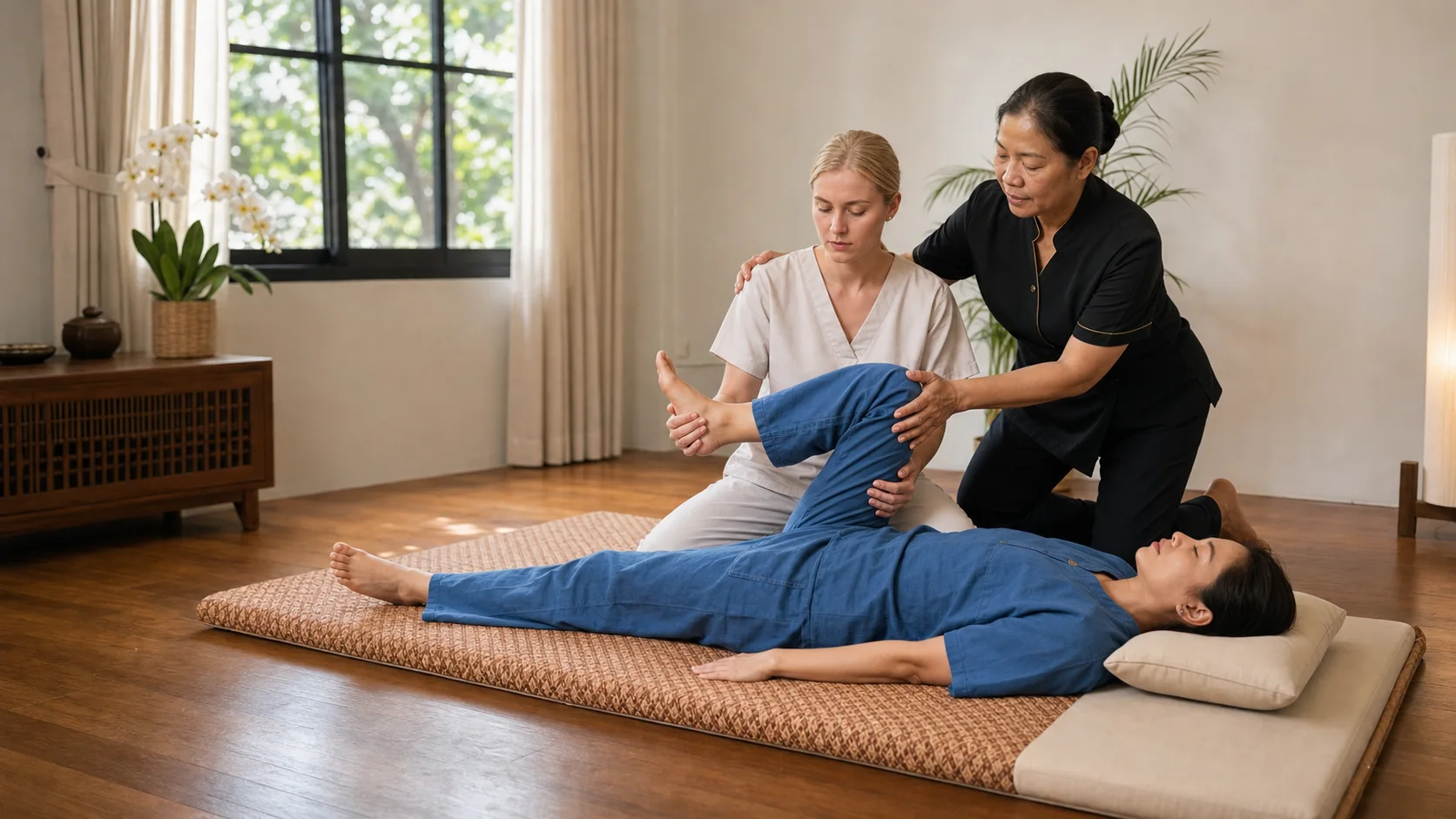
Nuad Thai School: One of the Best Thai Massage Schools and Spa Training Centers in Bangkok, Operated by Loft Thai Spa
Bangkok has long been recognized as one of the world capitals of massage, spa therapy, traditional healing, and wellness culture. For many international students, professional therapists, spa owners, and wellness entrepreneurs, Thailand is not simply a…
Read the guide
How Education and Heritage Power the World of Loft Thai Spa
In the competitive landscape of luxury wellness, where every establishment promises tranquility and rejuvenation, true distinction is rarely a matter of chance. It is easy to construct a beautiful room, to light scented candles, and to play soft music that…
Read the guide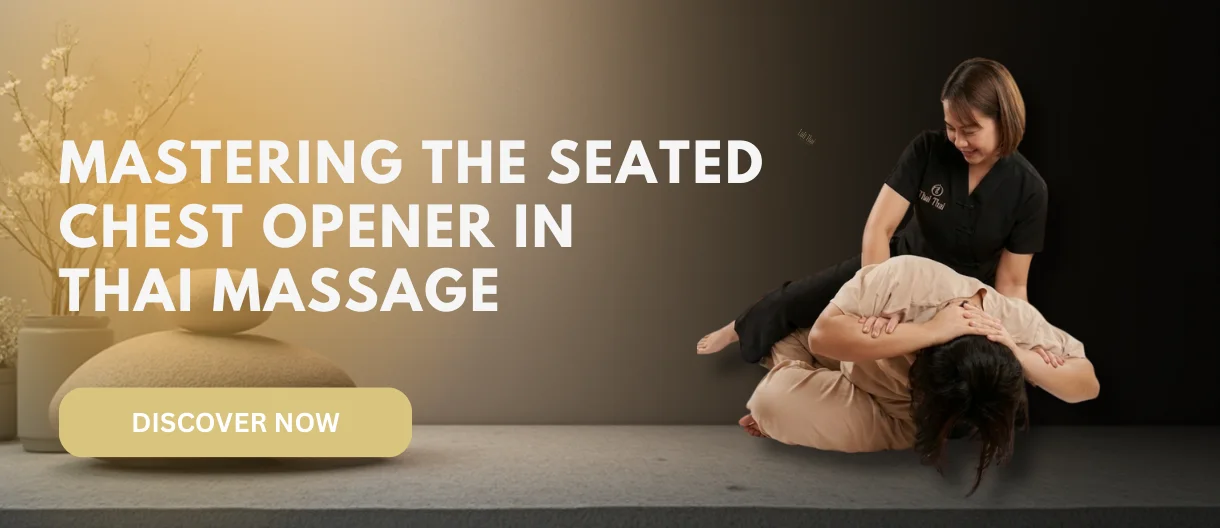
The Art of Dat Lang: Mastering the Seated Chest Opener in Traditional Thai Massage
In the intricate choreography of Traditional Thai Massage —often described as "lazy man's yoga"—there is a rhythm to the session. It begins at the feet, working through the energy lines (Sen lines) of the legs, moving up the back, and often culminates in a…
Read the guide
How to Become the Best Therapist in Thailand
Thailand is known around the world as the Land of Smiles—but for those who work in wellness, it’s also the Land of Healing. From ancient temples to modern spa sanctuaries, massage therapy in Thailand is not just a job; it is an art, a philosophy, and a…
Read the guide